Truck Simulator vs Bus Simulator – Which Is Better?
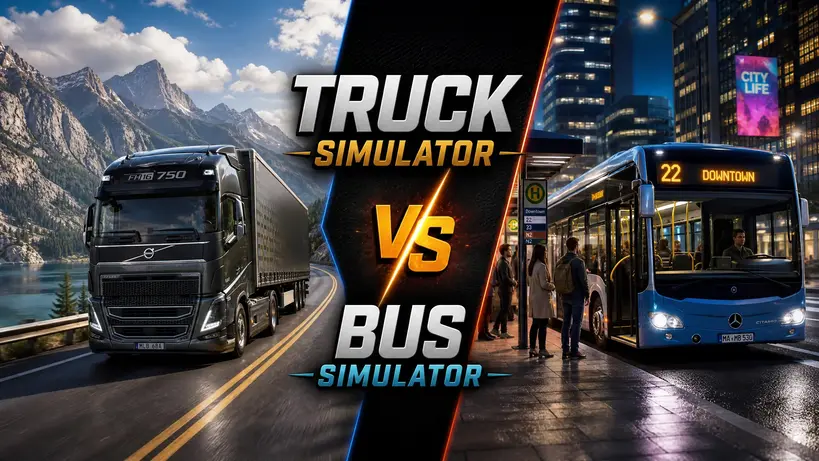
Driving simulator games have become a favorite for players who enjoy realistic vehicles and steady, rewarding gameplay. Some players prefer hauling heavy cargo across countries. Others enjoy picking up passengers and following busy city routes. Both styles offer a different kind of challenge. That choice often leads to one question: Truck Simulator vs Bus Simulator – Which Is Better? The answer depends on how you like to play. A truck driving simulator focuses on freight delivery, long-distance travel, and building a transport company. A bus driving simulator puts you in charge of passengers, route schedules, and city traffic. Both games reward careful driving, but they create very different experiences.
Popular titles like Euro Truck Simulator 2 (ETS2), American Truck Simulator (ATS), Truck Simulator Ultimate, Bus Simulator Ultimate, Bus Simulator 21, and Bus Simulator Indonesia (Bussid) have built loyal communities. Many players enjoy realistic physics, detailed vehicle interiors, weather effects, and career progression. Official developers continue to improve these games with updates, new maps, and gameplay features, keeping players engaged for years.
This guide compares truck and bus simulators across the features that matter most. You’ll see how they differ in gameplay, realism, graphics, vehicle handling, multiplayer, customization, and replay value. We’ll also compare popular games on PC, Android, iOS, and consoles. By the end, you’ll know which simulator fits your play style, whether you enjoy long-haul trucking, passenger transport, company management, or simply relaxing behind the wheel.
Truck Simulator vs Bus Simulator: Quick Comparison
If you want a quick answer, this table highlights the biggest differences between both simulator genres.
| Feature | Truck Simulator | Bus Simulator |
| Main Objective | Deliver cargo across long distances | Transport passengers on scheduled routes |
| Driving Style | Long-distance highway driving | City streets, suburbs, and urban traffic |
| Difficulty | Moderate | Moderate to High |
| Realism | High, with detailed logistics and vehicle handling | High, with passenger management and route schedules |
| Vehicle Size | Semi-trucks, trailers, and heavy-duty rigs | City buses, coaches, and articulated buses |
| Gameplay Focus | Freight delivery, route planning, and business growth | Passenger pickup, timetable management, and safe driving |
| Career System | Strong company management and fleet expansion | Route management with bus and driver upgrades |
| Multiplayer | Available in games like Euro Truck Simulator 2 and American Truck Simulator | Available in selected titles but less common |
| Vehicle Customization | Extensive truck upgrades, paint jobs, trailers, and accessories | Bus liveries, interiors, and cosmetic upgrades |
| Mod Support | Large modding community with maps, trucks, weather, and physics mods | Smaller but active community with bus skins, maps, and liveries |
| Map Variety | Countries, highways, mountain roads, and rural areas | Cities, neighborhoods, terminals, and bus routes |
| Traffic Experience | Highway traffic with occasional city driving | Dense city traffic with frequent stops and intersections |
| Relaxation Level | Great for long, calm driving sessions | More active due to traffic and passenger stops |
| Best Platform Choices | PC, Android, and iOS | PC, Android, iOS, and consoles |
| Best For | Players who enjoy exploration, logistics, and long-haul driving | Players who enjoy city driving, passenger transport, and following schedules |
Choose a truck simulator if you enjoy open roads, cargo delivery, and building a transport business. Pick a bus simulator if you prefer city driving, passenger management, and route-based gameplay. The next section explains how each simulator works and what makes them different.
What Is a Truck Simulator?
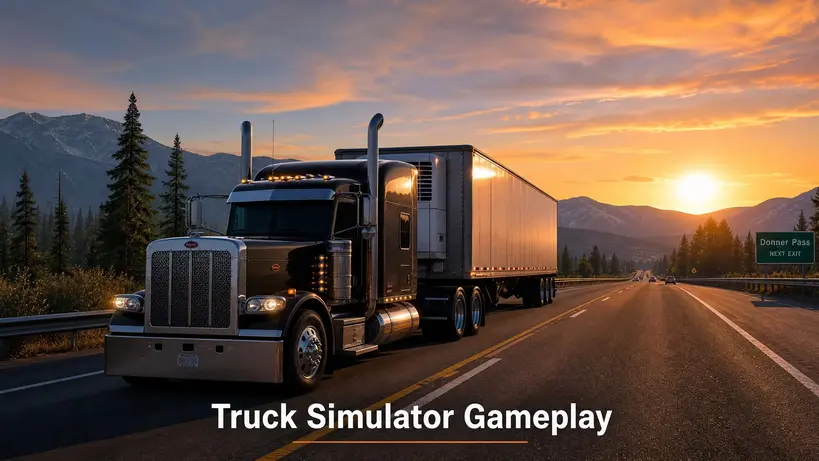
A truck simulator lets you step into the role of a professional truck driver. Your main job is simple. Pick up cargo, deliver it safely, and grow your transport business. Every trip tests your driving skills, planning, and time management. Unlike arcade driving games, truck simulators focus on realistic driving. You must follow traffic rules, handle heavy trailers, and plan each journey carefully. Road conditions, weather, and fuel usage can also affect your trip.
Core Gameplay
The gameplay revolves around completing freight delivery jobs. Each contract sends you to a different destination with a specific type of cargo. Your earnings depend on safe driving, timely deliveries, and avoiding damage. As you progress, you unlock better trucks, larger contracts, and new regions to explore. Many games also include free driving, allowing you to travel without active delivery missions.
Cargo Transportation and Freight Logistics
Cargo delivery sits at the center of every truck simulator. You may transport construction equipment, fuel tanks, food products, machinery, or fragile goods. Each load changes how your truck handles on the road. Freight logistics adds another layer of strategy. You choose contracts based on distance, cargo value, fuel costs, and delivery deadlines. Smart decisions help you earn more money and expand your business faster.
Route Planning and Long-Haul Driving
Every delivery starts with a route. You can follow the suggested GPS or choose a different path based on traffic, toll roads, or travel distance. Long-haul driving creates the classic truck simulator experience. Many trips take you across multiple cities or even countries. These journeys reward patience and careful driving instead of constant action.
Games like Euro Truck Simulator 2 let players drive across much of Europe, while American Truck Simulator recreates highways and cities across the United States. Both games earn praise for their road networks and detailed environments.
Economy System and Company Management
Most truck simulators include a business management system. At first, you work as a hired driver. After earning enough money, you can purchase your own truck and accept higher-paying contracts. As your income grows, you can hire AI drivers, buy garages, and manage several vehicles. This economy system turns the game into more than a driving simulator. It becomes a transportation business where every decision affects your profits.
Fleet Expansion
Growing your fleet is one of the most rewarding parts of truck simulator games. You can buy new trucks, assign drivers, and open garages in different locations. A larger fleet generates passive income while you continue driving your own routes. This management system adds long-term goals and keeps the gameplay engaging long after the first few deliveries.
Truck Customization
Customization gives each truck a personal touch. Most games let you change paint colors, wheels, lights, bumpers, mirrors, horns, and interior accessories. You can also upgrade engines, transmissions, and suspension to improve performance. Popular titles support thousands of community-made mods. Players often install custom trailers, real company logos, weather improvements, and high-quality truck models. Strong mod support has helped games like Euro Truck Simulator 2 remain popular for years.
Popular Truck Simulator Games
If you’re looking for the best truck driving simulator, these titles stand out:
These games share the same goal but deliver different experiences. Some focus on realistic logistics, while others balance driving with business management. That difference becomes even clearer when you compare them with bus simulators in the next section.
What Is a Bus Simulator?
A bus simulator puts you in the driver’s seat of a passenger bus. Your job goes beyond driving from one place to another. You must pick up passengers, stay on schedule, follow traffic laws, and complete each route safely. Unlike a truck simulator, which focuses on cargo delivery, a bus simulator centers on passenger transport. Every stop, turn, and delay affects your performance. Safe driving keeps passengers happy and helps you earn better rewards.
Passenger Transport
Passenger transport drives the entire gameplay. You follow assigned routes, stop at designated locations, and carry people to their destinations. Unlike freight, passengers react to your driving. Hard braking, sharp turns, or missed stops can lower their satisfaction. Careful driving creates a smoother experience and improves your overall rating.
Timetables and Schedules
Most bus simulators require you to follow a timetable. Every route has a planned schedule, and arriving too early or too late can affect your score. Time management becomes a key part of the experience. You must balance speed with safety while dealing with traffic, traffic lights, and road conditions.
Urban Driving
City driving sets bus simulators apart from truck simulators. Instead of spending hours on highways, you navigate busy streets filled with intersections, pedestrians, cyclists, and parked vehicles. Frequent turns and narrow roads demand constant attention. Every route presents new driving challenges, especially during rush hour.
Bus Stops and Passenger Pickup
Stopping at the right location matters just as much as driving. You need to align the bus with the curb, open the doors, and allow passengers to board and exit safely. Many games reward accurate parking and smooth passenger handling. Missing a stop or stopping too far from the curb often leads to penalties.
Following Traffic Rules
Traffic rules play a major role in every bus simulator. Running red lights, speeding, or causing accidents can reduce your earnings or mission score. Players must watch speed limits, traffic signals, pedestrian crossings, and right-of-way rules throughout each route. This focus on road safety adds realism to every trip.
Passenger Satisfaction
Passengers expect a comfortable ride. Smooth acceleration, gentle braking, and careful cornering improve their experience. Some games also track cleanliness, punctuality, and driving behavior. High passenger ratings unlock better rewards and encourage consistent performance.
Route Management
Many bus simulators include route management alongside driving. You may unlock new routes, purchase additional buses, and expand your transport network as your company grows. Some titles also let you hire drivers and manage a fleet, adding light business management to the driving experience.
Coach Buses vs City Buses
Not every bus simulator offers the same type of driving. City buses operate on short urban routes with frequent stops, heavy traffic, and strict schedules. These routes require constant attention and precise vehicle control. Coach buses focus on longer trips between cities. They spend more time on highways and carry passengers over greater distances. This style feels closer to long-haul trucking while keeping passenger transport at its core.
Popular Bus Simulator Games
Several bus simulators stand out for their gameplay, realism, and community support.
Bus simulators reward precision, patience, and good time management. They offer a different driving experience than truck simulators. The next section compares both genres side by side, making it easier to decide which one matches your play style.
Truck Simulator vs Bus Simulator: Key Differences
Both genres focus on realistic driving, but they create very different experiences. A truck simulator rewards planning and long-distance travel. A bus simulator tests your timing, precision, and ability to manage passengers. Understanding these differences makes it easier to choose the right game.
Gameplay Style
The biggest difference between a truck simulator and a bus simulator is the purpose of every trip. One revolves around cargo delivery. The other centers on passenger transport.
Cargo vs Passengers
In a truck simulator, your cargo becomes your responsibility. You haul goods between warehouses, factories, ports, and distribution centers. Every load has its own weight, value, and delivery deadline. Heavy or fragile cargo often requires extra care. A bus simulator changes that responsibility. Instead of freight, you carry people. Passengers expect a safe, comfortable ride. They also expect you to stop at every station and stay close to the timetable. Smooth driving helps keep passenger satisfaction high. This single difference shapes almost every part of the gameplay.
Delivery vs Schedules
Truck simulators focus on completing delivery contracts. You accept a job, collect the trailer, and drive to the destination. You usually have some freedom in how you complete the trip, as long as you deliver the cargo on time. Bus simulators follow fixed schedules. Every route includes planned stops and arrival times. Running late can reduce your rewards, while arriving too early may force you to wait before boarding passengers. Good time management becomes part of every journey.
Route Flexibility
Truck driving simulators usually offer more freedom. You can often choose different highways, scenic roads, or alternate routes to avoid traffic or shorten travel time. This freedom makes games like Euro Truck Simulator 2 and American Truck Simulator feel more like open-world driving experiences. Bus simulators follow predefined routes. You still drive through busy streets, but you must visit each bus stop in the correct order. Missing a stop or leaving the route often results in penalties or failed missions.
Mission Design
Mission structure also sets these genres apart. Truck simulator missions often include:
Bus simulator missions usually involve:
If you enjoy freedom, long-distance driving, and logistics, a truck simulator offers more variety. If you prefer structured objectives, city driving, and passenger management, a bus simulator provides a more routine but engaging experience. Does Bus Simulator Mod APK Require Root?
Driving Experience
Driving feels very different in a truck simulator and a bus simulator. Both require focus, but they test different skills. Truck games reward patience on long roads. Bus games demand precision in busy cities.
Highway Driving
Truck simulators spend most of their time on highways. You drive for hours across countries or states while hauling heavy cargo. These roads have fewer stops and smoother traffic flow. Long trips create a calm and relaxing experience. Games like Euro Truck Simulator 2 and American Truck Simulator feature large highway networks with realistic speed limits, fuel stations, and rest areas. Their detailed road systems make long-distance driving feel authentic. Bus simulators rarely stay on highways for long. Most routes pass through city streets, residential areas, and business districts. Coach bus games, such as Fernbus Coach Simulator, offer more highway driving, but city traffic still plays a major role.
Urban Traffic
City driving defines the bus simulator experience. Every route includes traffic lights, pedestrian crossings, parked vehicles, and busy intersections. You must stay alert because conditions change quickly. Truck simulators also include cities, but they spend less time there. Most deliveries connect through highways before entering urban areas near the destination. If you enjoy handling constant traffic and quick decisions, a bus simulator offers a greater challenge.
Turning Radius
Large vehicles need extra space to turn, but trucks and buses behave differently. A semi-truck pulls a long trailer. Wide turns help prevent the trailer from hitting curbs, signs, or nearby vehicles. Trailer movement also changes with every turn. A city bus moves as one vehicle. It does not pull a trailer, but its long body still needs careful steering on narrow streets. Articulated buses require even more attention because the middle section bends during turns.
Parking
Parking tests your control in both genres. Truck simulators often ask you to reverse a trailer into loading docks or warehouses. These tasks become harder with longer trailers and tighter spaces. Bus simulators focus on precision. You must stop close to the curb so passengers can board safely. Even a small mistake can lower your performance score or delay the route. Players who enjoy technical parking challenges often prefer truck simulators. Those who value accuracy at every stop usually enjoy bus simulators more.
Reverse Driving
Reverse driving separates beginners from experienced players. Backing up a truck with a trailer takes practice. Small steering movements can send the trailer in the wrong direction. Learning trailer control becomes one of the biggest milestones in games like ETS2 and ATS. Reversing a bus feels simpler because the vehicle moves as one unit. You still need to watch blind spots and nearby traffic, but you do not manage trailer angles.
Narrow Roads
Both simulators include tight roads, but the experience differs. Truck simulators feature mountain roads, construction zones, and rural routes where large trailers leave little room for mistakes. Weight and cargo size add another challenge. Bus simulators place you on crowded city streets lined with parked cars, bus lanes, and sharp corners. Frequent stops and heavy traffic keep the pressure high throughout the route. Overall, truck simulators reward smooth control over long distances. Bus simulators demand constant attention in compact urban spaces. Your preferred driving style will decide which experience feels more enjoyable.
Map Design
Map design shapes the overall experience in both genres. Some players enjoy crossing entire countries. Others prefer busy streets with frequent stops. The right choice depends on where you want to drive.
Open Highways
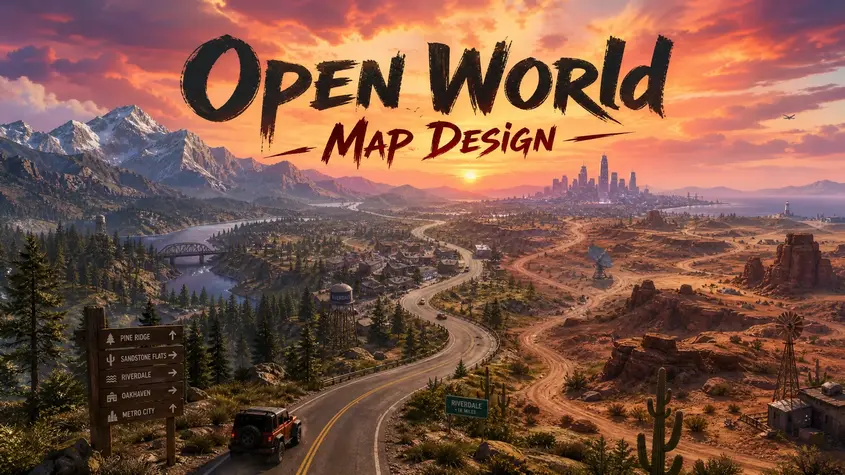
Truck simulators excel at long-distance travel. Most maps connect cities with highways, mountain passes, bridges, tunnels, and rural roads. You spend more time driving than stopping, which creates a smooth and relaxing pace. Games like Euro Truck Simulator 2 (ETS2) and American Truck Simulator (ATS) feature thousands of miles of roads inspired by real locations. Official map expansions continue to add new regions, highways, and landmarks, giving players more places to explore.
Cities
Both genres include cities, but they use them differently. Truck simulators treat cities as delivery hubs. You enter urban areas to pick up or deliver freight before returning to the highway. Traffic increases near industrial zones, ports, and warehouses. Bus simulators make cities the center of gameplay. Every route runs through streets filled with intersections, traffic lights, bus lanes, and pedestrian crossings. You spend nearly every minute driving in an urban environment. Games like The Bus recreate large parts of Berlin with impressive street layouts, while Bus Simulator 21 offers detailed city districts with realistic road networks.
Villages and Rural Areas
Truck simulators often travel through small towns and villages between major cities. These quieter roads break up long highway journeys and add variety to each trip. Some bus simulators also include suburban and rural routes, especially coach bus games like Fernbus Coach Simulator. Still, most bus routes stay closer to populated areas than truck routes.
Countries and Regions
Truck simulators usually cover much larger regions.
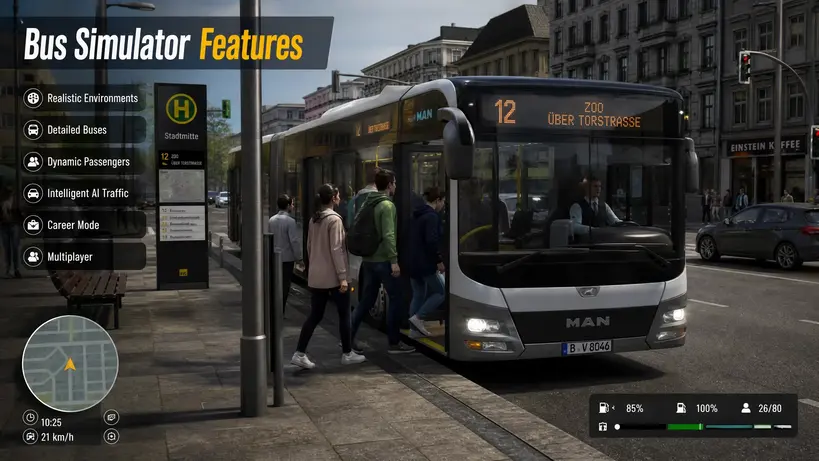
Euro Truck Simulator 2 allows players to drive across multiple European countries. Each region features different road signs, speed limits, landscapes, and driving rules. American Truck Simulator recreates U.S. states with recognizable highways, deserts, forests, mountains, and major cities. New DLC packs continue to expand the map, adding more routes and destinations. Bus simulators focus on individual cities or smaller regions. This smaller scale allows developers to create detailed streets, bus terminals, neighborhoods, and public transport systems.
Open-World Exploration
If you enjoy exploring, truck simulators offer more freedom. You can accept jobs that take you across hundreds of miles or simply drive without a destination. The large maps encourage sightseeing and discovery. Bus simulators provide a more structured experience. You follow fixed routes instead of choosing your own path. Exploration comes from learning different neighborhoods and mastering new bus lines rather than traveling across vast regions. For players who value open-world driving, truck simulators usually offer the better experience. If you prefer detailed city maps and realistic public transport networks, bus simulators deliver a more focused driving environment.
Map Design
Map design shapes the overall experience in both genres. Some players enjoy crossing entire countries. Others prefer busy streets with frequent stops. The right choice depends on where you want to drive.
Open Highways
Truck simulators excel at long-distance travel. Most maps connect cities with highways, mountain passes, bridges, tunnels, and rural roads. You spend more time driving than stopping, which creates a smooth and relaxing pace. Games like Euro Truck Simulator 2 (ETS2) and American Truck Simulator (ATS) feature thousands of miles of roads inspired by real locations. Official map expansions continue to add new regions, highways, and landmarks, giving players more places to explore.
Cities
Both genres include cities, but they use them differently. Truck simulators treat cities as delivery hubs. You enter urban areas to pick up or deliver freight before returning to the highway. Traffic increases near industrial zones, ports, and warehouses. Bus simulators make cities the center of gameplay. Every route runs through streets filled with intersections, traffic lights, bus lanes, and pedestrian crossings. You spend nearly every minute driving in an urban environment. Games like The Bus recreate large parts of Berlin with impressive street layouts, while Bus Simulator 21 offers detailed city districts with realistic road networks.
Villages and Rural Areas
Truck simulators often travel through small towns and villages between major cities. These quieter roads break up long highway journeys and add variety to each trip. Some bus simulators also include suburban and rural routes, especially coach bus games like Fernbus Coach Simulator. Still, most bus routes stay closer to populated areas than truck routes.
Countries and Regions
Truck simulators usually cover much larger regions. Euro Truck Simulator 2 allows players to drive across multiple European countries. Each region features different road signs, speed limits, landscapes, and driving rules. American Truck Simulator recreates U.S. states with recognizable highways, deserts, forests, mountains, and major cities. New DLC packs continue to expand the map, adding more routes and destinations. Bus simulators focus on individual cities or smaller regions. This smaller scale allows developers to create detailed streets, bus terminals, neighborhoods, and public transport systems.
Open-World Exploration
If you enjoy exploring, truck simulators offer more freedom. You can accept jobs that take you across hundreds of miles or simply drive without a destination. The large maps encourage sightseeing and discovery. Bus simulators provide a more structured experience. You follow fixed routes instead of choosing your own path. Exploration comes from learning different neighborhoods and mastering new bus lines rather than traveling across vast regions. For players who value open-world driving, truck simulators usually offer the better experience. If you prefer detailed city maps and realistic public transport networks, bus simulators deliver a more focused driving environment.
Career Progression
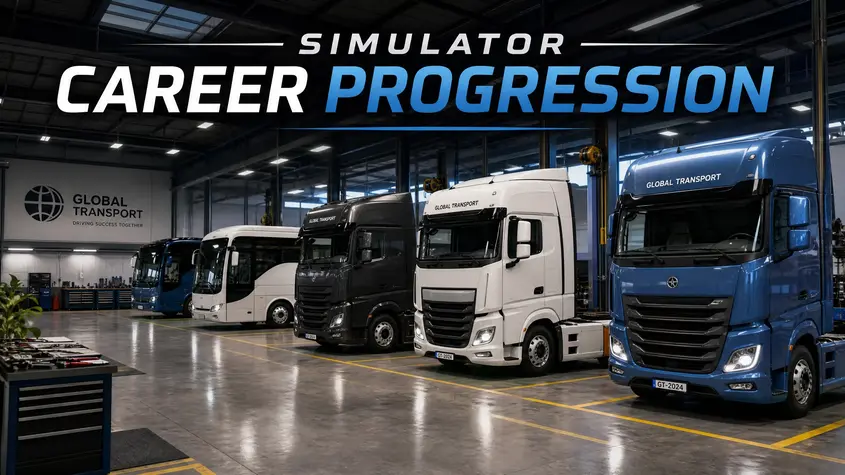
Career progression gives both genres long-term value. You start with basic jobs and limited money. As you earn more, you unlock better vehicles and larger business opportunities. The biggest difference lies in what you manage. A truck simulator focuses on building a freight company. A bus simulator centers on growing a passenger transport service.
Truck Simulator Career Progression
Most truck simulator games begin with you working as a contract driver. You complete freight deliveries to earn money and gain experience. Every successful job brings you closer to owning your first truck. Once you buy a truck, more opportunities open up.
You can:
Games like Euro Truck Simulator 2 and American Truck Simulator feature deep economy systems. You manage loans, fuel costs, repairs, driver wages, and garage upgrades. Every decision affects your company’s growth. Truck Simulator Ultimate adds another layer by combining driving with transport company management. You can build a global logistics business while completing deliveries yourself. This steady progression gives players a strong reason to keep playing after hundreds of deliveries.
Bus Simulator Career Progression
Bus simulators follow a different path. You usually begin with one bus and a few local routes. As your reputation grows, you unlock new buses, additional routes, and larger operating areas. Your progress often includes:
Passenger ratings play a major role. Safe driving, smooth braking, clean buses, and on-time arrivals improve your reputation. Higher ratings often unlock better contracts and increase your earnings. Games like Bus Simulator Ultimate let you grow a bus company by purchasing vehicles, hiring employees, and serving more destinations. Bus Simulator 21 also includes route planning and fleet management, giving players more control over daily operations.
Which Career System Feels Better?
If you enjoy business growth and logistics, truck simulators offer the deeper management experience. Building a fleet of trucks and expanding garages creates clear long-term goals. If you prefer public transport and daily operations, bus simulators provide a rewarding management system. Passenger feedback, route planning, and fleet maintenance make every decision matter. Both genres reward steady progress. The difference comes down to what kind of company you want to build. A freight business suits players who enjoy logistics. A bus company fits those who like managing routes and serving passengers.
Vehicle Customization
Customization lets you give your vehicle a personal style. Both genres offer upgrade options, but truck simulators provide more freedom.
Truck Simulator
Truck simulators include a wide range of customization features. You can improve both the appearance and performance of your truck.
Common options include:
Games like Euro Truck Simulator 2 and American Truck Simulator also support thousands of mods. You can install custom trucks, trailers, interiors, and accessories.
Bus Simulator
Bus simulators focus more on visual changes than performance upgrades.
Popular customization options include:
Games like Bus Simulator Indonesia (Bussid) and Bus Simulator Ultimate offer community-made liveries and bus skins. Many players recreate real-world bus companies with custom designs. Winner: Truck simulators offer more customization choices, especially for players who enjoy modifying vehicles. Bus simulators still provide enough options to create a unique look, but the overall selection is smaller.
Graphics Comparison
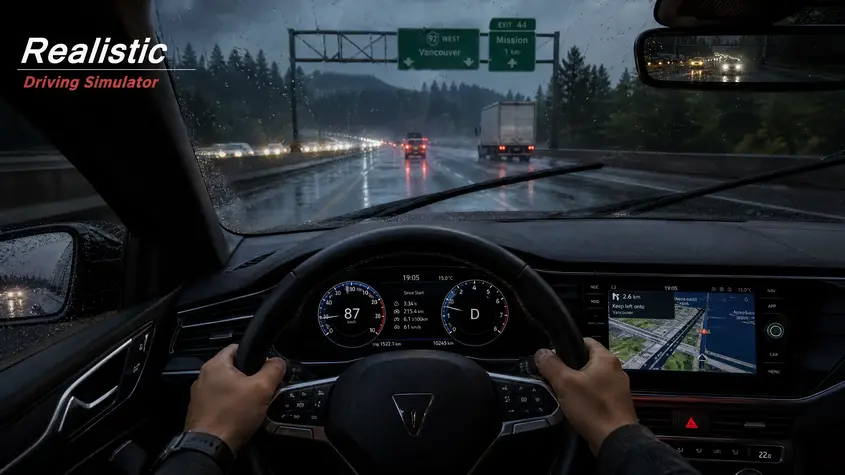
Graphics play a big role in making a driving simulator feel realistic. Both truck and bus simulators have improved over the years, but the quality depends on the game you choose.
Lighting
Truck simulators often deliver better lighting during long highway drives. Sunrise, sunset, and nighttime journeys create a realistic atmosphere. Bus simulators focus more on city lighting. Streetlights, traffic signals, and building lights make urban driving feel lively, especially after dark.
Weather
Most modern simulator games include changing weather. Rain, fog, and cloudy skies affect both visibility and driving. Games like Euro Truck Simulator 2, American Truck Simulator, and The Bus use weather effects to make each trip feel different.
Textures
Truck simulators usually feature larger environments with detailed roads, mountains, forests, and highways. Bus simulators invest more detail in city streets, bus terminals, sidewalks, and nearby buildings.
Cockpit Detail
Both genres offer detailed cockpit views. Truck games often include interactive dashboards, GPS units, mirrors, and realistic instrument panels. Bus simulators add ticket machines, passenger doors, mirrors, and route displays to match real buses.
Day and Night Cycle
A realistic day and night cycle adds variety to every trip. Driving during rush hour feels very different from driving late at night. Most popular games now include smooth time transitions and changing road conditions throughout the day.
Visual Realism
If visual quality is your priority, The Bus, American Truck Simulator, and Euro Truck Simulator 2 rank among the best. They offer detailed environments, realistic lighting, and high-quality vehicle models. Mobile games like Truck Simulator Ultimate and Bus Simulator Ultimate also deliver impressive graphics for Android and iOS, though they cannot match the visual detail of modern PC simulators.
Winner: PC truck simulators hold a slight edge because of their larger maps, detailed environments, and strong graphical support. Bus simulators shine in dense urban areas with realistic city streets and passenger-focused details.
Driving Physics
Driving physics affect how each vehicle feels on the road. Truck simulators focus on heavy loads and long-distance control. Bus simulators emphasize smooth handling in busy city streets.
Weight
Trucks carry cargo that changes the vehicle’s balance and stopping distance. A heavier trailer needs more control, especially on hills and sharp turns. Buses have a more balanced weight because passengers sit inside the vehicle. This makes handling more predictable throughout the route.
Suspension
Truck suspension adjusts to different cargo weights and road surfaces. Heavy loads can make the truck lean during corners. Bus suspension aims to keep passengers comfortable. It absorbs bumps well and provides a smoother ride on city roads.
Steering
Steering a truck takes more effort, especially with a long trailer attached. Wide turns help avoid hitting curbs or other vehicles. Buses respond more quickly, but their length still requires careful steering on narrow streets.
Braking
Truck simulators demand early braking because heavy cargo increases stopping distance. Bus simulators involve frequent braking at traffic lights and bus stops. Smooth braking improves passenger comfort and your overall rating.
Cornering
Cornering feels more challenging in a truck. The trailer follows a different path than the cab, so every turn needs extra care. Buses corner more naturally, but tight city roads leave little room for mistakes.
Vehicle Handling
Truck simulators, especially Euro Truck Simulator 2 and American Truck Simulator, deliver realistic handling that changes with cargo weight and road conditions. Bus simulators like OMSI 2 and The Bus focus on accurate steering, braking, and passenger comfort during urban driving.
Winner: Truck simulators offer deeper driving physics and a stronger sense of realism. Bus simulators provide smoother handling, making them ideal for players who enjoy city driving and scheduled routes. Best Bus Simulator Games for Android
Sound Design
Sound plays a major role in making a simulator feel realistic. Good audio helps you feel connected to the vehicle and the road. Both genres perform well, but they focus on different sounds.
Engine Sounds
Truck simulators feature deep and powerful engine sounds. Each truck model has its own engine tone, making long drives feel more authentic. Bus simulators use smoother engine sounds that match city and coach buses. The audio is quieter but still realistic.
Air Brakes
Air brakes add realism to both genres. The familiar hissing sound becomes part of every stop and parking maneuver. Truck simulators often make air brake sounds more noticeable because of heavier vehicles.
Passenger Sounds
This feature gives bus simulators an advantage. You hear passengers boarding, chatting, and leaving the bus at each stop. These sounds make routes feel more active. Truck simulators rarely include passenger audio since the focus stays on cargo transport.
Traffic Ambience
Both genres include traffic noise, horns, sirens, and city sounds. Truck simulators balance highway and city traffic, while bus simulators spend more time in busy urban environments.
Weather Audio
Rain hitting the windshield, thunder, and strong winds make driving more immersive. These effects become even more noticeable during long trips or heavy traffic.
Winner: Bus simulators create a livelier atmosphere with passenger sounds and busy city noise. Truck simulators deliver a stronger engine experience, making long-haul driving feel more authentic.
AI Traffic
AI traffic makes every journey feel more realistic. It affects how you drive, react, and plan your route. Both truck and bus simulators include traffic systems, but they create different challenges.
Road Behavior
Truck simulators focus on highway driving. AI vehicles usually maintain steady speeds and change lanes naturally. Bus simulators place you in crowded city streets. Cars stop suddenly, merge into traffic, and block intersections more often.
Traffic Density
Truck simulators usually have lighter traffic on highways and heavier traffic near cities. Bus simulators feature dense traffic throughout most routes. Rush hour adds another level of difficulty.
Pedestrians
Pedestrians play a bigger role in bus simulators. You must watch for people crossing roads or walking near bus stops. Truck simulators include pedestrians in some urban areas, but they have less impact on gameplay.
Traffic Signals
Both genres require you to obey traffic lights, stop signs, and speed limits. Ignoring signals can lead to fines or failed missions. Bus simulators demand extra care because frequent stops place you at more intersections.
Accidents and Road Events
Many truck simulators include roadworks, lane closures, vehicle breakdowns, and traffic accidents. These events can slow your journey and force you to change routes. Bus simulators also feature traffic jams and road incidents, though they usually affect city streets rather than highways.
Winner: Truck simulators offer more varied road events during long-distance trips. Bus simulators create a busier driving experience with heavier traffic, pedestrians, and frequent intersections.
Multiplayer
Multiplayer lets you enjoy simulator games with friends. Truck simulators offer more online features, while bus simulators provide limited multiplayer options.
Truck Simulator
Truck simulators have a stronger multiplayer experience.
Players can:
Games like Euro Truck Simulator 2 and American Truck Simulator support official Convoy mode. Community projects such as TruckersMP also allow thousands of players to share the road.
Bus Simulator
Bus simulators offer multiplayer in selected games.
You can:
However, multiplayer support is less common than in truck simulators. Many mobile bus games focus on single-player, and co-op features vary by title.
Winner
Truck simulators clearly lead in multiplayer. Convoy mode, active online communities, and shared driving create a richer experience for players who enjoy driving with friends. Bus simulators are improving, but online options remain more limited.
Mod Support
Mods add new content and keep simulator games fresh. They can improve graphics, expand maps, and introduce new vehicles. Truck simulators lead this category with one of the largest modding communities in gaming.
Truck Simulator
Truck simulators support a wide range of community-made mods.
Popular mods include:
Games like Euro Truck Simulator 2 and American Truck Simulator have thousands of free mods. Many players use them to create a more realistic driving experience.
Bus Simulator
Bus simulators also support mods, but the selection is smaller.
Common community content includes:
Bus Simulator Indonesia (Bussid) has a very active modding community. Players regularly share custom buses, liveries, and local maps.
Winner
Truck simulators offer stronger mod support thanks to their large community and huge collection of maps, vehicles, physics, and weather mods. Bus simulators still provide plenty of customization, especially through community-made bus skins and liveries.
Truck Simulator vs Bus Simulator: Pros and Cons
Both simulator genres have clear strengths and weaknesses. Your choice depends on how you like to drive and what type of gameplay keeps you engaged.
Truck Simulator
Pros
Cons
Bus Simulator
Pros
Cons
Quick Take
If you enjoy long-distance driving, logistics, and business management, a truck simulator is the better choice. If you prefer urban driving, passenger transport, and route-based gameplay, you’ll likely enjoy a bus simulator more.
Which Simulator Is More Realistic?
Both genres aim to recreate real driving, but they focus on different parts of the job. Truck simulators emphasize logistics and long-distance travel. Bus simulators focus on passenger transport and city operations.
Physics and Vehicle Handling
Euro Truck Simulator 2 (ETS2) and American Truck Simulator (ATS) deliver realistic truck physics. Cargo weight affects acceleration, braking, and cornering, making every delivery feel different. OMSI 2 and The Bus stand out for realistic bus handling. Steering, braking, and suspension closely match real city buses, especially in heavy traffic.
Fuel and Economy
Truck simulators include deeper fuel and economy systems. You manage fuel costs, repairs, driver salaries, and business expenses while expanding your company. Bus simulators also include fuel management, but they place more focus on completing routes and maintaining passenger satisfaction than running a large transport business.
Traffic and Driver Fatigue
Both genres feature AI traffic, traffic lights, and road rules. Truck simulators often include long-distance challenges such as driver fatigue and rest stops, adding another layer of realism. Bus simulators replace that with frequent traffic, scheduled stops, and busy intersections that require constant attention.
Route Realism and Passenger Behavior
Truck simulators recreate real highways, industrial areas, and freight routes across large regions. Bus simulators shine in urban settings. Passengers board and exit at bus stops, and your driving style can affect their comfort and overall rating.
Verdict
If you want the most realistic trucking experience, ETS2 and ATS lead the way with advanced physics, detailed economy systems, and long-haul driving. If realistic city bus operations interest you more, OMSI 2 and The Bus offer some of the most authentic passenger transport experiences available. Overall, truck simulators provide a slightly higher level of realism because they combine driving, logistics, fuel management, and business simulation. Bus simulators deliver equally impressive realism in city driving and passenger operations.
Which Simulator Has Better Graphics?
Graphics have improved across both genres. Modern truck and bus simulators offer detailed vehicles, realistic lighting, and immersive environments. The overall quality depends on the platform and the game.
PC Games Lead in Visual Quality
On PC, The Bus, American Truck Simulator (ATS), Euro Truck Simulator 2 (ETS2), and Bus Simulator 21 deliver the best visuals.
Mobile Games
On mobile, Truck Simulator Ultimate and Bus Simulator Ultimate stand out. Both provide sharp vehicle models, dynamic weather, and detailed cockpits for Android and iOS devices. While they look impressive on smartphones, they cannot match the visual quality of modern PC simulators.
Graphics Comparison
| Feature | Truck Simulators | Bus Simulators |
| Textures | Detailed roads, landscapes, and trucks | Detailed buses and city streets |
| Reflections | Strong vehicle and road reflections | Good reflections in urban areas |
| Lighting | Excellent sunrise, sunset, and weather effects | Realistic city lighting and street illumination |
| Cockpit Quality | Highly detailed dashboards and interiors | Detailed driver cabins with passenger controls |
| Environmental Detail | Large highways, mountains, forests, and towns | Dense cities, bus stops, terminals, and traffic |
Verdict
If you prefer large open environments and scenic road trips, ATS and ETS2 offer the better visual experience. If you enjoy detailed cities and realistic public transport, The Bus and Bus Simulator 21 are excellent choices. Overall, PC truck simulators hold a slight advantage because of their larger maps and richer environmental detail. Bus simulators compete closely with highly detailed city environments and realistic vehicle interiors.
Which Simulator Is More Fun?
There isn’t a single winner. The more enjoyable game depends on what you expect from a driving simulator. Some players want quiet highway trips. Others prefer busy streets and constant activity.
Choose a truck simulator if you enjoy:
Games like Euro Truck Simulator 2, American Truck Simulator, and Truck Simulator Ultimate are great for players who enjoy steady progress and freedom on the road. Choose a bus simulator if you enjoy:
Games like Bus Simulator 21, The Bus, Bus Simulator Ultimate, and Bus Simulator Indonesia (Bussid) offer a more active driving experience with frequent stops and changing traffic conditions.
Verdict
If you like exploration, long drives, vehicle customization, logistics, and relaxing gameplay, a truck simulator is the better choice. If you prefer city driving, passenger transport, and route-based challenges, you’ll likely have more fun with a bus simulator.
Choose a Bus Simulator If You Enjoy…
A bus simulator is a better fit if you prefer structured driving and busy city environments. Every route keeps you engaged with traffic, passengers, and scheduled stops. Choose a bus simulator if you enjoy:
Games like Bus Simulator 21, The Bus, Bus Simulator Ultimate, and Bus Simulator Indonesia (Bussid) reward careful driving, punctuality, and attention to detail.
Quick Tip: If you enjoy a fast-paced driving experience with constant interaction, a bus simulator will likely keep you entertained. If you prefer open roads and fewer interruptions, a truck simulator is the better choice.
Which Is Better for Beginners?
Both games are beginner-friendly, but they teach different driving skills. Your experience depends on what type of driving you enjoy.
| Feature | Truck Simulator | Bus Simulator |
| Learning Curve | Easy to moderate | Moderate |
| Controls | Simple to learn | Easy but requires frequent inputs |
| Difficulty | Increases with trailers | Increases with city traffic |
| Driving Physics | Trailer handling takes practice | More predictable handling |
| Parking | Challenging, especially while reversing | Easier but needs accurate bus stops |
| Traffic | Mostly relaxed highways | Heavy urban traffic |
| Mistakes | Missed turns or damaged cargo | Late arrivals and poor passenger ratings |
| Accessibility | Great for new simulator players | Better after learning basic driving |
Verdict
If you’re playing your first driving simulator, a truck simulator is usually the better choice. The controls are easier to learn, highway driving is less stressful, and you can improve at your own pace. A bus simulator becomes more enjoyable once you’re comfortable with traffic, parking, and following schedules. It requires more attention because every route includes frequent stops and busy city roads.
Truck Simulator vs Bus Simulator on Different Platforms
The best simulator also depends on where you play. Some games are built for mobile, while others offer a deeper experience on PC and consoles.
Android
Android offers several high-quality truck and bus simulators.
Truck Simulators
Bus Simulators
Truck games on Android focus on cargo delivery, company management, and long-distance driving. Bus games emphasize passenger transport, city routes, and custom liveries.
PC
PC delivers the most realistic driving experience with better graphics, physics, and mod support.
Truck Simulators
Bus Simulators
If realism is your priority, PC is the best platform for both truck and bus simulators.
Console
Console players also have several good options, though the selection is smaller than on PC.
Bus Simulators
Truck Simulators
Other driving simulators are also available on PlayStation and Xbox, but features such as mod support may be more limited than on PC.
Verdict
Best Truck Simulator Games
If you’re looking for the best truck driving simulator, these games stand out for their gameplay, realism, and replay value.
Euro Truck Simulator 2 (ETS2)
One of the most popular truck simulators ever made. It offers large maps, realistic driving physics, company management, and excellent mod support. It’s a top choice for players who enjoy long-haul driving across Europe.
Best for: Realism, mods, and long-distance driving.
American Truck Simulator (ATS)
ATS lets you haul freight across detailed U.S. highways and cities. The game features licensed trucks, beautiful landscapes, and a deep career mode.
Best for: Scenic road trips and realistic trucking in the United States.
Truck Simulator Ultimate
A popular mobile game that combines truck driving with transport company management. You can buy trucks, hire drivers, and expand your business while completing deliveries.
Best for: Android and iOS players who want driving and business management.
Truckers of Europe 3
This mobile simulator is known for smooth controls, realistic physics, and detailed truck interiors. It focuses on the driving experience rather than complex management.
Best for: Players who want realistic truck driving on mobile.
World Truck Driving Simulator
This game features a variety of trucks, changing weather, and challenging roads. It also includes vehicle customization and realistic suspension effects.
Best for: Players who enjoy different road conditions and detailed vehicle handling.
Quick Recommendation
Best Bus Simulator Games
Whether you play on mobile or PC, these Bus Simulator offer realistic driving, detailed vehicles, and enjoyable gameplay.
Bus Simulator Ultimate
One of the most popular mobile bus simulators. It combines passenger transport with company management, allowing you to buy buses, hire drivers, and expand your routes.
Best for: Android and iOS players who enjoy business management and long-distance coach driving.
Bus Simulator Indonesia (Bussid)
Bussid stands out for its active community and extensive customization. Players can install custom buses, liveries, and maps, making every game feel unique.
Best for: Mobile players who enjoy mods and local driving experiences.
Bus Simulator 21
A feature-rich PC and console game with licensed buses, detailed city maps, multiplayer support, and realistic passenger systems.
Best for: Players who want modern graphics and city bus operations.
OMSI 2
OMSI 2 is known for its realistic driving physics and authentic bus controls. It has a steeper learning curve but rewards players with one of the most realistic bus driving experiences available.
Best for: Simulation fans who value realism over graphics.
The Bus
The Bus recreates Berlin with impressive detail. It features realistic traffic, detailed bus interiors, and high-quality visuals that make city driving feel authentic.
Best for: Players looking for realistic graphics and immersive urban driving.
Fernbus Coach Simulator
Unlike city bus simulators, Fernbus Coach Simulator focuses on long-distance coach travel. You drive between cities, follow schedules, and transport passengers across realistic highway routes.
Best for: Players who prefer highway driving and intercity coach services.
Quick Recommendation
Frequently Asked Questions
Which is better, Truck Simulator or Bus Simulator?
It depends on your preference. Choose Truck Simulator for long drives and logistics, or Bus Simulator for city driving and passenger transport.
Is Truck Simulator more realistic?
Yes, most truck simulators offer deeper physics, economy systems, and long-haul driving mechanics.
Is Bus Simulator harder?
It can be. Busy traffic, fixed schedules, and frequent stops make bus driving more demanding.
Which simulator has better graphics?
On PC, ETS2, ATS, and The Bus offer some of the best visuals in the genre.
Which simulator is better on Android?
Truck Simulator Ultimate is great for trucking, while Bus Simulator Ultimate and Bussid are top choices for bus driving.
Which simulator is more relaxing?
Truck simulators are generally more relaxing because of long highway drives and fewer interruptions.
Which simulator has better multiplayer?
Truck simulators offer better multiplayer with features like Convoy mode and larger online communities.
Can I play both offline?
Yes, most truck and bus simulator games support offline single-player mode.
Which simulator has better mods?
Truck simulators have a larger modding community with more maps, vehicles, and gameplay enhancements.
Which simulator is best for beginners?
Truck simulators are usually easier for beginners because they have a gentler learning curve and less city traffic.
Conclusion
Both genres offer a great driving experience, but they appeal to different players. The right choice depends on what you enjoy most.
Choose a Truck Simulator if you:
Choose a Bus Simulator if you:
If you’re still deciding between Truck Simulator vs Bus Simulator, think about your driving style. For relaxed exploration and business growth, go with a truck simulator. For fast-paced city routes and passenger management, a bus simulator is the better fit. No matter which you choose, both genres deliver hours of realistic and rewarding gameplay.