Bus Simulator Graphics: Best Settings, Visual Quality, Performance & Realism Guide
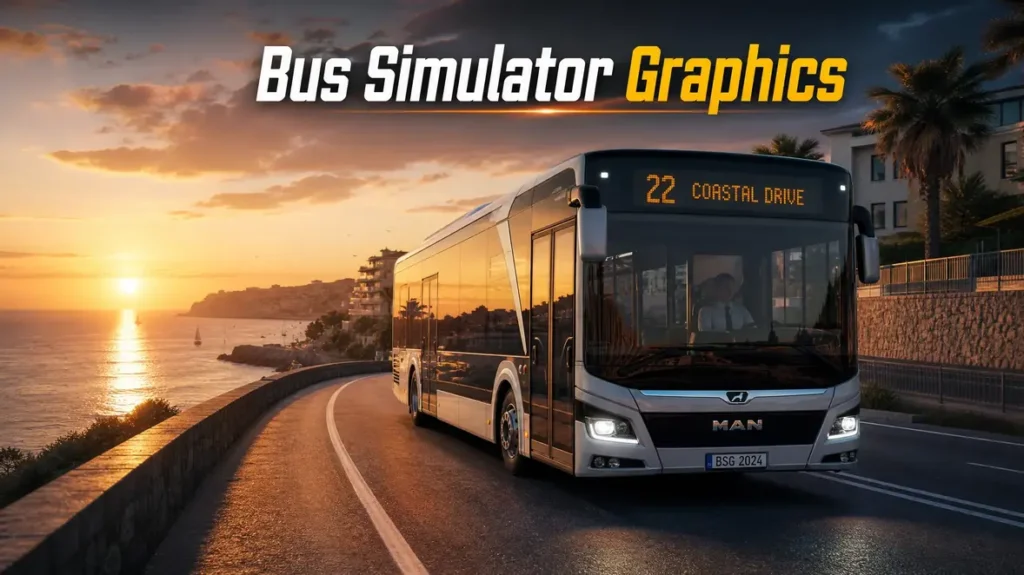
Bus Simulator Graphics shape every part of your driving experience. Clear visuals make roads, traffic, and weather feel more realistic. Good graphics also help you spot signs, vehicles, and road hazards with ease. Visual quality does more than improve appearance. It creates a stronger sense of being behind the wheel. Detailed bus interiors, realistic lighting, and smooth weather effects make every route more enjoyable. Stable frame rates also keep steering and braking responsive.
Each Bus Simulator game offers a different visual experience. Bus Simulator 21 delivers improved textures, better lighting, and more detailed environments. Bus Simulator Ultimate focuses on attractive city environments and optimized graphics for many devices. Bus Simulator unlimated mony 18 still offers solid visuals with balanced performance on supported hardware. Graphics settings also play a major role in performance. The right balance between image quality and FPS creates smoother gameplay.
Players with entry-level or high-end systems can adjust settings for the best results. This guide covers everything you need to know about Realistic Bus Simulator Graphics. You will learn how different games compare, choose the best Bus Simulator Graphics Settings, improve performance, select suitable hardware, and use visual enhancements that make your simulator look even better.
What Makes Bus Simulator Graphics Realistic?
Realistic graphics combine detailed environments, advanced lighting, and smooth animations. These elements create a driving experience that feels closer to real roads. They also improve immersion without changing the core gameplay.
High-Resolution Textures
High-resolution textures make every surface look sharper and more natural. They add depth to the environment and improve overall visual quality. Road textures show lane markings, cracks, and different pavement types with greater detail. This makes each route feel more believable. Buildings feature sharper windows, walls, and architectural details. Cities look more alive as players drive through different districts. Vegetation includes detailed trees, grass, bushes, and roadside plants. Better foliage adds variety to highways and rural roads. Bus materials display realistic paint finishes, metal panels, glass, and tires. Reflections on these surfaces improve the appearance of each vehicle. Passenger models feature improved clothing, facial details, and movement. These small details make bus stops and terminals feel busier.
Advanced Lighting System
Lighting changes how every scene looks throughout the journey. A well-designed system improves realism without affecting driving controls. Dynamic lighting adjusts naturally as the environment changes. Buildings, vehicles, and roads respond to different light sources. The day and night cycle creates different driving conditions. Morning, afternoon, evening, and nighttime each offer a unique atmosphere. Sunrise and sunset effects add warm colors and long shadows. These moments create attractive views across the map. Interior lighting keeps the cockpit visible during night routes. Dashboard controls remain easy to read in darker conditions. Street lights brighten roads, intersections, and city streets after sunset. They also improve visibility during late-night driving.
Weather Effects
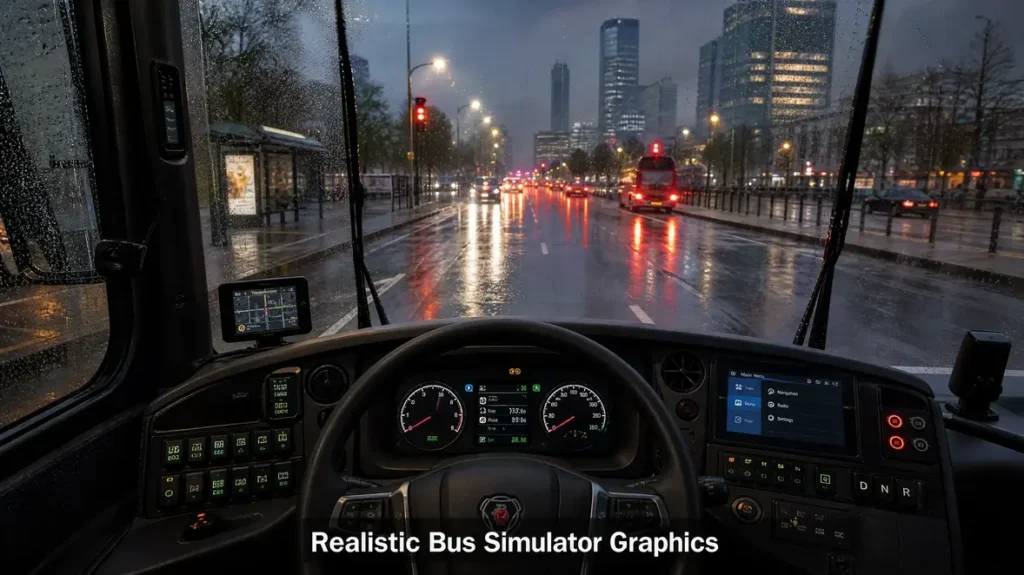
Weather systems make every trip feel different. Changing conditions also require players to pay closer attention while driving. Rain creates moving water on roads and windshields. Wet surfaces reflect nearby vehicles and city lights. Fog reduces visibility and changes how distant objects appear. Drivers must slow down and stay alert. Some games include snow for selected maps or updates. Snow changes road appearance and creates a colder atmosphere. Wet roads produce realistic reflections after rainfall. These reflections increase the sense of visual realism. Water reflections appear on puddles, rivers, and other surfaces. They improve the overall quality of Bus Simulator visuals.
Detailed Bus Models
Detailed buses make every vehicle feel authentic. High-quality models improve both interior and exterior views. Exterior designs include realistic body shapes, headlights, wheels, and manufacturer styling. Clean textures make each bus stand out. The cockpit view places players inside a detailed driver’s cabin. Controls remain clear and easy to recognize. Dashboard displays show gauges, screens, switches, and warning indicators. These details support a more realistic driving experience. Mirrors display surrounding traffic and nearby vehicles. Clear reflections help drivers change lanes safely. Steering wheel animations match player input smoothly. Natural movement adds another layer of realism during every trip.
City Environment
A detailed world makes every route more enjoyable. Diverse locations keep long drives interesting. Urban areas include tall buildings, shops, bus stops, and busy intersections. These locations create lively city driving. Highways offer wide roads, overpasses, and faster traffic flow. Long-distance routes feel open and realistic. Rural routes feature small towns, open fields, forests, and country roads. These areas provide a different driving atmosphere. Traffic density changes how busy the roads feel. More vehicles create realistic traffic patterns and driving challenges. Pedestrians walk along sidewalks, cross streets, and wait at bus stops. Their movement makes the world feel active and believable.
Bus Simulator 21 Graphics Overview
Bus Simulator 21 Graphics deliver noticeable improvements over earlier releases. The game offers sharper visuals, richer environments, and smoother lighting. These upgrades create a more realistic bus driving experience without losing stable performance on supported hardware.
Visual Improvements Over Previous Versions
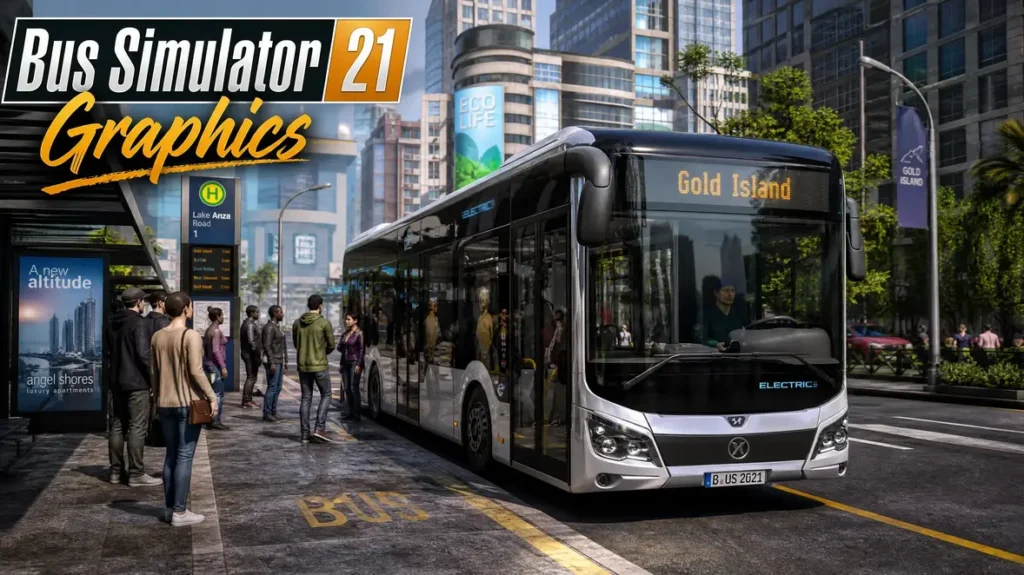
Bus Simulator 21 introduces higher-quality textures across vehicles, roads, and surrounding environments. Surfaces look cleaner and more detailed than previous entries. Shadows appear softer and more natural throughout the day. Buildings, buses, and roadside objects cast realistic shadows under changing light. Reflections look sharper on bus bodies, windows, and wet roads. These effects improve visual depth during both daytime and night driving. The lighting system creates brighter mornings and darker evenings with smooth transitions. Street lights and vehicle headlights also appear more realistic. Environmental details have improved across the map. Roads include better markings, sidewalks feature richer textures, and vegetation looks denser.
Interior Graphics
The driver’s cabin offers a more authentic feel than earlier versions. Every detail supports a realistic driving experience. The dashboard features clear gauges, digital displays, and functional controls. Drivers can read important information without distraction. Passenger cabins include detailed seating, handrails, and interior materials. These additions make buses feel closer to real public transport. Driver animations appear smoother during steering, braking, and turning. Natural movement improves immersion throughout every route. The instrument cluster displays speed, fuel, warning lights, and navigation information with excellent clarity.
Exterior Graphics
Bus exteriors show a higher level of detail from every angle. Improved modeling creates more realistic vehicle designs. The bus body features smoother curves, cleaner panels, and accurate proportions. High-resolution textures improve overall appearance. Paint reflections respond naturally to sunlight and nearby objects. Different weather conditions also affect surface reflections. Windows display improved transparency and reflections without reducing visibility. Glass surfaces look more realistic during daytime and rain. Wheels include detailed rims, tire patterns, and suspension movement. These small improvements increase overall visual quality. Headlights, brake lights, and indicator lights produce brighter and more natural illumination. Night driving benefits from these visual upgrades.
Environment Rendering
The game world feels larger and more believable through improved rendering techniques. Every location contains greater visual detail. Buildings feature sharper textures and more varied architectural styles. Cities look busy without appearing repetitive. Roads display cleaner lane markings, realistic pavement textures, and smoother intersections.
Highways and local streets each have distinct appearances. Trees, grass, and roadside vegetation add depth to the environment. Better foliage improves the overall Bus Simulator visuals. The weather system changes lighting, visibility, and road conditions throughout the journey. Rain and fog create different driving challenges. Traffic visuals include detailed cars, trucks, buses, and moving pedestrians. Busy roads make each route feel more active and realistic.
Bus Simulator 21 Graphics Compared with Other Bus Simulator Games
Every bus simulator takes a different approach to graphics and performance. Some games focus on visual realism, while others prioritize smooth gameplay across more devices. Comparing these titles helps players choose the best experience for their hardware.
Bus Simulator 21 vs Bus Simulator Ultimate
Bus Simulator 21 delivers sharper textures and more detailed environments. Roads, buildings, and buses look cleaner at higher graphics settings. Bus Simulator Ultimate offers attractive visuals with good optimization for mobile devices. Its graphics suit a wider range of hardware. Lighting looks more realistic in Bus Simulator 21. Dynamic shadows and improved reflections create better visual depth. Bus Simulator Ultimate uses simpler lighting effects to maintain stable performance.
This approach works well on lower-powered devices. Weather effects appear more detailed in Bus Simulator 21. Rain, wet roads, and changing light improve immersion. Bus Simulator Ultimate provides smooth gameplay with lower hardware demands. Players can enjoy stable FPS on many smartphones and tablets. Players seeking Bus Simulator 21 ultra graphics will notice higher visual fidelity. Mobile players may prefer Bus Simulator Ultimate for accessibility and performance.
Bus Simulator 21 vs Bus Simulator 18
Bus Simulator 21 improves nearly every visual element from Bus Simulator 18. The updates create a more polished driving experience. Texture quality looks sharper across buses, roads, and city environments. Small details remain clear even at higher resolutions. Lighting produces smoother transitions between day and night. Interior and exterior scenes benefit from improved illumination.
Reflections appear cleaner on bus paint, windows, and wet surfaces. These effects add realism without overwhelming the hardware. Environmental details have expanded throughout the map. Trees, buildings, and roadside objects look richer than before. Bus Simulator 21 also delivers better optimization on modern systems. Players can achieve higher settings with suitable hardware.
Bus Simulator 21 vs Fernbus Simulator
Fernbus Simulator focuses heavily on long-distance realism and highly detailed environments. Many players consider it one of the strongest visual simulators. Bus Simulator 21 offers colorful cities and well-designed urban routes. It balances image quality with accessible gameplay. Fernbus Simulator features highly detailed road networks and countryside scenery. Its textures often appear more realistic during long journeys. Lighting and weather systems look excellent in both games. Fernbus Simulator provides slightly stronger atmospheric effects in many situations. Bus Simulator 21 generally runs better on mid-range gaming systems. Fernbus Simulator often requires stronger hardware for similar performance. Players who value realistic bus game graphics may enjoy both titles. The better choice depends on hardware and gameplay preferences.
Bus Simulator 21 vs Euro Truck Simulator 2
Euro Truck Simulator 2 has received many graphics updates over the years. Its visuals remain impressive despite its earlier release. Bus Simulator indonesia 21 features modern bus models and detailed city environments. It places greater focus on public transport operations. Euro Truck Simulator 2 offers larger maps and diverse landscapes. Long highways showcase detailed terrain and changing weather. Bus Simulator 21 creates busy urban areas with pedestrians, traffic, and bus stops.
These features add life to every route. Both games include realistic lighting, reflections, and weather effects. Each title balances visual quality with performance optimization. Hardware requirements remain moderate for both games. Higher graphics presets and 4K resolution require a capable GPU with enough VRAM. Players comparing Bus Simulator vs Truck Simulator graphics will notice different strengths. Bus Simulator 21 shines in city detail, while Euro Truck Simulator 2 delivers outstanding long-distance scenery.
Best Graphics Settings for Bus Simulator 21
The best Bus Simulator Graphics Settings depend on your hardware. Higher settings improve image quality but increase GPU and VRAM usage. A balanced setup delivers smooth gameplay and sharp visuals.
Recommended Settings for High-End PCs
High-end systems can run the game with maximum visual quality while maintaining stable FPS.
These settings produce detailed environments, realistic lighting, and cleaner reflections. A modern GPU with at least 8 GB of VRAM provides the best results.
Recommended Settings for Mid-Range PCs
Mid-range hardware can achieve an excellent balance between visual quality and performance.
This setup keeps Bus Simulator FPS stable during busy traffic and larger city areas. Most players will notice little difference from ultra settings while gaining smoother gameplay.
Best Settings for Low-End PCs
Lower-powered systems should focus on stable performance before visual quality.
Lower settings reduce GPU load and improve frame rates. The game still looks good while running more smoothly on older hardware.
1080p vs 1440p vs 4K Graphics
1080p offers the best balance between image quality and performance. Most gaming PCs can run this resolution comfortably. 1440p delivers sharper textures and clearer distant objects. It also increases GPU usage and VRAM requirements. 4K provides the highest level of visual detail. Bus models, road textures, and city environments appear noticeably sharper.
Higher resolutions demand a stronger graphics card. Players should lower selected settings if FPS drops during gameplay. For most users, 1440p with High settings delivers the best mix of visual quality, performance, and hardware efficiency. Players with powerful systems can enjoy Bus Simulator 21 ultra graphics at 4K without sacrificing smooth gameplay.
How to Improve Graphics in Bus Simulator
You can improve Bus Simulator Graphics without buying new hardware. A few settings changes often deliver sharper visuals and smoother gameplay. Start with one adjustment at a time and test the results before making additional changes.
Update Graphics Drivers
Install the latest graphics driver for your GPU. Driver updates often improve game performance and visual quality. New drivers can fix rendering issues, texture glitches, and screen flickering. They also improve compatibility with recent game updates. Download drivers only from your GPU manufacturer’s official website.
Choose the Right Graphics Preset
Graphics presets provide a quick way to adjust multiple settings. Most games include Low, Medium, High, and Ultra presets. Select the highest preset your system can handle without losing smooth FPS. You can fine-tune individual settings afterward. A balanced preset usually offers the best Bus Simulator graphics optimization.
Increase Texture Quality
Texture quality has a major impact on image clarity. Higher textures make buses, roads, and buildings appear sharper. High-resolution textures improve bus interiors, dashboard controls, and city environments. They also reduce blurry surfaces. Use High or Ultra textures only if your GPU has enough VRAM.
Enable Better Anti-Aliasing
Anti-aliasing smooths rough edges on vehicles, roads, and buildings. It creates a cleaner and more natural image. Medium or High anti-aliasing works well for most systems. Higher settings improve visual quality but reduce performance slightly. Choose the option that maintains stable frame rates.
Improve Lighting Effects
Lighting changes the overall appearance of the game world. Better lighting creates a more realistic atmosphere. Increase lighting quality if your hardware allows it. Dynamic lighting improves sunrise, sunset, and nighttime driving. Quality lighting also enhances reflections on buses and wet roads.
Adjust Shadow Quality
Shadows add depth to buildings, vehicles, and roadside objects. Higher settings produce softer and more accurate shadows. Shadow quality can reduce FPS in crowded city areas. Lower this setting first if performance becomes unstable. Medium shadows often provide the best balance between quality and speed.
Increase Draw Distance
Draw distance controls how far the game renders objects. Higher values make distant buildings, vehicles, and trees appear earlier. A longer draw distance creates a more realistic driving experience. It also increases GPU workload. Choose a setting that keeps gameplay smooth during busy routes.
Use Resolution Scaling Carefully
Resolution scaling changes image sharpness without changing your display resolution. Higher values improve clarity but require more graphics power. Lower scaling can improve FPS on older systems. Higher scaling produces cleaner images on powerful hardware. Test different values until you find the right balance.
Install Graphics Enhancement Mods (Where Supported)
Some Bus Simulator games support visual enhancement mods. These mods can improve textures, lighting, weather effects, and color quality. Install mods only from trusted community sources. Check that each mod matches your game version before installing it. Too many graphics mods can reduce performance or create compatibility issues. Add them one at a time and test the game after each installation.
Graphics Performance and Optimization
Good graphics should not come at the cost of smooth gameplay. The right settings help you enjoy better visuals while maintaining stable performance. Understanding how each option affects your system makes optimization much easier.
How Graphics Settings Affect FPS
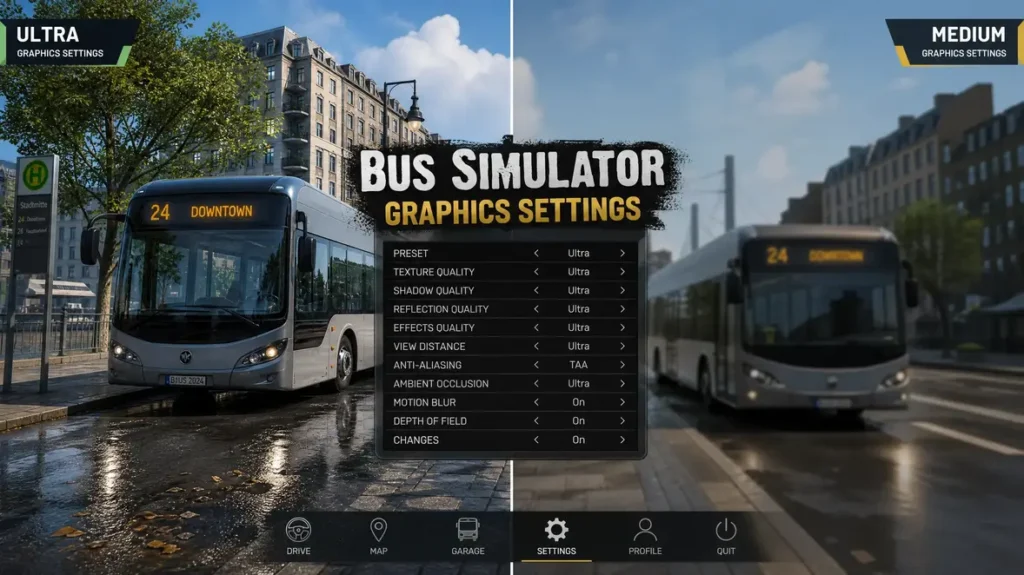
Every graphics setting affects FPS differently. Some options place a heavier load on your hardware than others. Texture quality mainly uses VRAM. Shadow quality, reflections, and lighting rely more on GPU power. Higher resolutions also reduce frame rates because the GPU renders more pixels. Busy city areas with heavy traffic can lower FPS even on powerful systems. Lower demanding settings first if performance drops.
GPU vs CPU Usage
The GPU handles rendering, lighting, textures, and visual effects. It has the biggest impact on Bus Simulator Graphics. The CPU manages traffic, passenger behavior, physics, and game calculations. A slow processor can create a CPU bottleneck. A balanced system delivers the best experience. Pairing a powerful GPU with an outdated CPU may still reduce performance. Monitor both components if you notice sudden frame drops or stuttering.
VRAM Requirements
VRAM stores textures, shadows, and other visual data while the game runs. More VRAM supports higher graphics settings and larger resolutions. For 1080p, 4 GB to 6 GB of VRAM usually provides good performance. For 1440p, 6 GB to 8 GB offers a smoother experience. For 4K graphics, 8 GB or more helps maintain high-quality textures without performance issues. Running out of VRAM may cause blurry textures, stuttering, and longer loading times.
Graphics Presets Explained
Graphics presets adjust several settings with one click. They offer a quick way to match the game to your hardware. Low focuses on maximum performance with reduced visual quality. Medium balances image quality and FPS for older gaming systems. High improves lighting, textures, and shadows while keeping gameplay smooth. Ultra delivers the highest level of visual fidelity. It also requires a powerful graphics card. After selecting a preset, adjust individual settings if needed.
DLSS, FSR, and Upscaling Technologies
Upscaling technologies improve performance by rendering the game at a lower internal resolution. They then produce a sharper final image. DLSS uses dedicated AI hardware available on supported NVIDIA graphics cards. FSR works on many AMD and NVIDIA GPUs without specialized hardware. Some games also support other upscaling methods depending on the game engine and updates. If your Bus Simulator title supports these features, they can increase FPS while preserving good image quality.
Reducing Lag Without Sacrificing Visual Quality
Lower shadow quality before reducing texture quality. This change often improves FPS with little impact on appearance. Reduce reflection quality if performance drops during rain or nighttime driving. Keep texture quality as high as your VRAM allows. Sharp textures improve Realistic Bus Simulator Graphics more than many other settings. Close unnecessary background applications before launching the game. This frees system resources for smoother gameplay. Keep graphics drivers updated and monitor GPU temperatures during long sessions. Stable hardware delivers more consistent performance over time.
Recommended Hardware for the Best Bus Simulator Graphics
The right hardware helps you enjoy smoother gameplay and better image quality. A balanced system handles high graphics settings without frequent frame drops. Choose components that match your preferred resolution and performance goals.
Recommended GPUs
The graphics card has the biggest impact on Bus Simulator Graphics. It handles textures, lighting, reflections, and other visual effects. For 1080p High settings, an NVIDIA GeForce RTX 3060, RTX 4060, or AMD Radeon RX 7600 delivers strong performance. For 1440p High or Ultra settings, consider an NVIDIA GeForce RTX 4070 or AMD Radeon RX 7800 XT.
Recommended CPUs
A capable processor keeps traffic, physics, and AI running smoothly. It also reduces CPU bottlenecks in busy city areas. For most players, a 6-core processor offers excellent performance. The Intel Core i5-13600K, Intel Core Ultra 5 series, AMD Ryzen 5 7600, and AMD Ryzen 7 7700 handle modern Bus Simulator games well. An 8-core processor provides additional headroom for streaming, recording, or multitasking.
RAM Requirements
Enough memory keeps gameplay smooth and reduces loading delays. 16 GB of RAM works well for most players using High graphics settings. 32 GB of RAM benefits players who multitask, install graphics mods, or run background applications. Systems with only 8 GB of RAM may experience longer loading times and occasional stuttering.
SSD vs HDD Performance
An SSD improves loading speed across the entire game. Maps, textures, and assets load much faster than on a traditional hard drive. An NVMe SSD delivers the quickest loading times and smoother asset streaming. An HDD can still run the game, but loading screens often take longer. Texture pop-in may also become more noticeable. Installing the game on an SSD creates a better overall experience.
Best Display Resolution
Your monitor resolution affects both image quality and GPU workload. 1080p remains the best choice for most players. It delivers sharp visuals with stable performance on mid-range hardware. 1440p produces clearer textures, improved visual fidelity, and more detailed environments. It requires a stronger graphics card. 4K offers the highest image quality with sharper buses, roads, and city scenery.
It also places the greatest demand on GPU performance. If you want the best balance between visual quality and smooth gameplay, 1440p paired with High graphics settings is an excellent choice. Players with premium hardware can enjoy Bus Simulator 21 4K graphics for the sharpest possible experience.
Graphics Mods and Visual Improvements
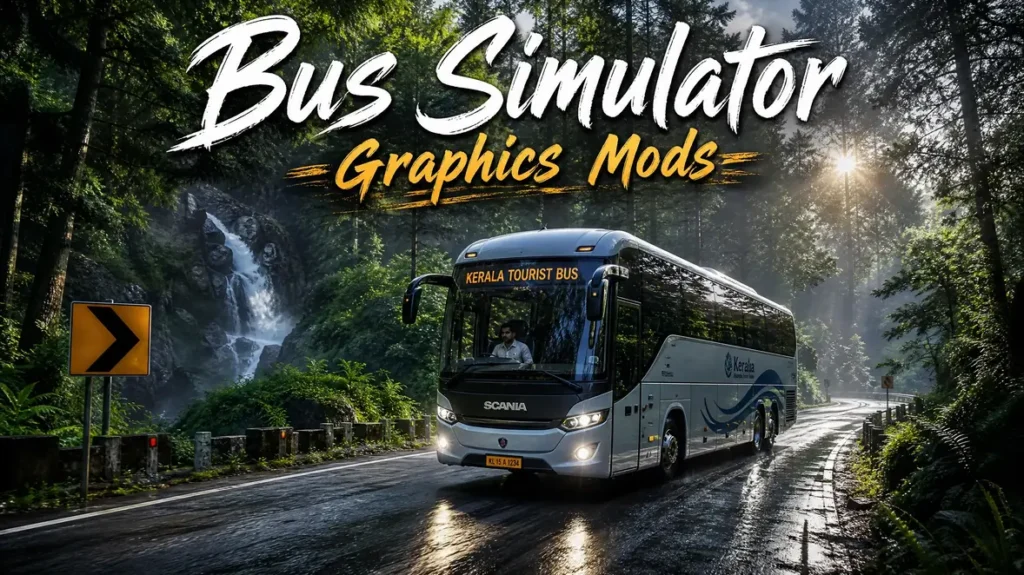
Graphics mods can improve the look of supported Bus Simulator games. They enhance textures, lighting, colors, and weather without changing core gameplay. Some mods focus on realism, while others improve performance. Choose mods that match your hardware and game version.
Texture Packs
Texture packs replace the game’s default textures with higher-quality versions. They make buses, roads, buildings, and vegetation appear sharper. High-resolution texture packs improve cockpit details and bus interiors. They also create cleaner city environments. These packs often require additional VRAM. Low-end systems may experience lower FPS after installation.
Lighting Mods
Lighting mods improve how light behaves throughout the game world. They create brighter days and more realistic nights. Many mods improve sunlight, headlights, and street lights. Shadows also appear softer and more natural. Better lighting increases the overall quality of Realistic Bus Simulator Graphics.
Weather Enhancement Mods
Weather mods improve rain, fog, clouds, and other environmental effects. They create more realistic driving conditions. Rain can produce clearer reflections on roads and bus windows. Fog adds depth and reduces visibility naturally. Some weather mods also improve sunrise and sunset colors. These changes make long routes more enjoyable.
Reshade Presets
Reshade presets adjust color, contrast, sharpness, and image clarity. They improve the game’s appearance without replacing textures. Many players use Reshade to create a cleaner and more realistic image. Different presets offer different visual styles. Heavy presets may reduce FPS on older graphics cards. Test each preset before using it regularly.
Performance-Friendly Visual Mods
Not every graphics mod reduces performance. Some mods improve image quality while keeping FPS stable. Optimized texture packs use less VRAM without sacrificing detail. Lightweight lighting mods also improve visuals with minimal GPU impact. These mods work well for players using mid-range or entry-level gaming systems.
Things to Check Before Installing Mods
Confirm that the mod supports your game version. Older mods may stop working after major updates. Download mods only from trusted community websites. This reduces the risk of corrupted files or security issues. Read the installation guide before copying any files. Many visual mods require specific installation steps. Back up your original game files before installing mods. This makes it easier to restore the default graphics if needed. Install one graphics mod at a time and test the game. This approach helps identify compatibility or performance problems quickly.
Common Graphics Problems and Fixes
Graphics issues can affect both visual quality and gameplay. Most problems have simple fixes that improve performance quickly.
Low FPS
Lower shadow quality and reflections first. Update your graphics drivers and close unnecessary background applications.
Blurry Textures
Increase texture quality if your GPU has enough VRAM. Verify the game files if textures remain blurry.
Screen Tearing
Enable V-Sync or use adaptive sync if your monitor supports it. Match the game’s FPS to your display refresh rate.
Stuttering
Install the game on an SSD for faster asset loading. Reduce background processes and monitor CPU and GPU usage.
Black Screen
Update graphics drivers and check for game updates. Verify game files and disable incompatible graphics mods.
Flickering Shadows
Lower shadow quality or switch to another shadow setting. Update your GPU driver to fix rendering issues.
Missing Textures
Corrupted game files often cause missing textures. Verify the installation and reinstall affected graphics mods if necessary. Most graphics problems disappear after adjusting settings and updating drivers. Test one change at a time to identify the exact cause.
Is Bus Simulator 21 Graphics Good?
Yes, Bus Simulator 21 Graphics deliver a strong visual experience for most players. The game combines detailed buses, realistic lighting, and well-designed environments. Its biggest strengths include high-resolution textures, dynamic weather, detailed interiors, and attractive city environments. These features create a more immersive bus driving experience. The game also has a few weaknesses. Ultra graphics settings can reduce FPS on older systems. Some areas show repeated textures and less detailed distant objects. Visual realism is impressive for a modern bus simulator. Bus models, dashboard details, traffic, and weather effects make daily routes feel more authentic.
Performance depends on your hardware and graphics settings. Mid-range PCs can usually achieve smooth gameplay at 1080p or 1440p with High settings. High-end systems can enjoy Bus Simulator 21 ultra graphics with excellent image quality. Players using entry-level hardware should lower demanding settings like shadows and reflections.
This adjustment improves performance without reducing overall visual quality too much. Players who enjoy realistic driving, detailed bus interiors, changing weather, and smooth city environments will appreciate the game’s graphics. It offers a good balance between visual fidelity and performance for casual and dedicated simulator fans alike.
Frequently Asked Questions
What are the best graphics settings for Bus Simulator 21?
For most players, High settings at 1080p or 1440p provide the best balance. Lower shadows before reducing texture quality if FPS drops.
How can I improve graphics in Bus Simulator?
Update your graphics drivers, increase texture quality, enable anti-aliasing, and adjust lighting settings. Install trusted graphics mods if your game supports them.
Does Bus Simulator 21 support ray tracing?
No, Bus Simulator 21 does not offer native ray tracing support. It uses traditional lighting and reflection techniques to create realistic visuals.
Is Bus Simulator 21 good on low-end PCs?
Yes, the game runs well on many low-end PCs with optimized settings. Lower shadows, reflections, and post-processing for smoother performance.
What graphics card is recommended for Bus Simulator 21?
An NVIDIA GeForce RTX 3060 or AMD Radeon RX 7600 handles High settings at 1080p comfortably. Faster GPUs perform better at higher resolutions.
Does Bus Simulator support DLSS or FSR?
Support depends on the game version and developer updates. Check the latest graphics settings to confirm whether your version includes these features.
Which Bus Simulator game has the best graphics?
Bus Simulator 21 offers the best balance of visual quality and performance among the main Bus Simulator titles. Fernbus Simulator provides stronger long-distance scenery for players seeking maximum realism.
Are graphics mods safe to use?
Yes, graphics mods are generally safe when downloaded from trusted community sources. Always back up your game files before installing any mods.
Final Thoughts
Bus Simulator Graphics play a major role in creating an enjoyable driving experience. Realistic lighting, detailed environments, weather effects, and well-designed bus models make every route feel more authentic. The best results come from balancing visual quality with stable performance. High graphics settings look impressive, but they should match your hardware to maintain smooth gameplay and consistent FPS. Small adjustments often make a noticeable difference.
Update your graphics drivers, fine-tune individual settings, and test each change before making another. If your game supports graphics mods, choose trusted and compatible visual enhancements to achieve sharper graphics without sacrificing performance. This approach helps you enjoy a smoother, more realistic Bus Simulator experience on any supported system.