Bus Simulator Ultimate Profit Guide: Step-by-Step Business Model

Earning coins feels simple when you start Bus Simulator Ultimate. It gets harder as fuel, tolls, repairs, and new buses cost more. A better approach treats your bus company like a small business. Track what each trip earns and what it costs. Then put part of your profit back into the company. This creates a simple cycle: Earn → Control costs → Reinvest → Expand → Earn more. The game supports company management, employee hiring, terminals, used buses, and profit-focused business play. This guide focuses on legit money-making methods without mods. You will learn how to improve route earnings, manage costs, grow your fleet, and build steady income. The goal is simple: make every coin work harder for your company.
Start With a Simple Profit Target
A large coin balance does not always mean your company makes good profit. Track each trip before spending your Bus Simulator Ultimate coins. Start with your current balance and record the route revenue after each trip. Then subtract fuel, toll fees, and maintenance costs.
Net Profit = Route Earnings − Running Costs
A route can show higher revenue but still leave you with less profit. Higher fuel use, toll fees, and repairs can reduce your final earnings. A shorter route may sometimes give you better returns after expenses.Track coins per hour as well. Divide your net profit by the trip time. This helps you compare routes using the same measure.Good Bus Simulator Ultimate money management starts with simple records. These Bus Simulator Ultimate profit tips help you find routes that actually grow your company.
Pick Routes Based on Net Profit
Route selection can make a big difference to your company earnings. Do not choose a route only because it shows high ticket sales. Compare the full trip before calling it profitable.
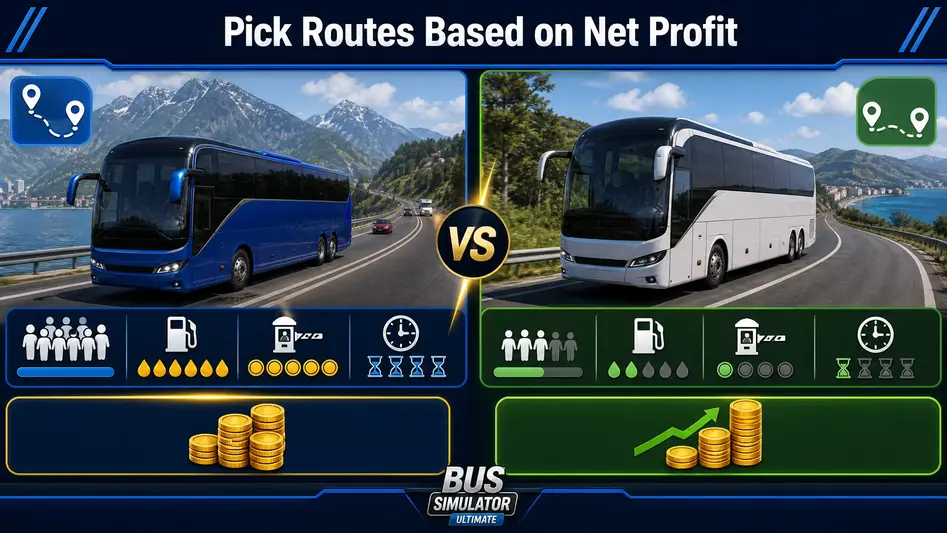
Check these factors:
Long-Haul vs Short Routes
Long-haul routes can produce higher revenue from larger passenger loads. They also take more time and can increase fuel and toll expenses. Use them when your bus can handle the operating costs. Short routes offer faster turnaround and lower fuel exposure. They work well during early progression. They also make good test routes for measuring your actual profit.
How to Measure Profit Per Hour
Use one simple calculation:
Net Route Profit ÷ Route Time = Profit Per Hour
This number gives you a fairer route comparison. A route with lower total earnings can still produce better hourly profit. You can use this method to evaluate the best profitable routes Bus Simulator Ultimate offers. It also helps identify the most profitable routes Bus Simulator Ultimate players can run with their current fleet. Avoid claiming one route always earns the most. Your bus, passenger demand, costs, and driving time can change the result. Compare your own Bus Simulator Ultimate routes before expanding your business.
Keep Passenger Revenue High
Passenger revenue depends on more than the number of seats on your bus. Your service quality can also affect the trip experience and company performance. Start by checking passenger demand before choosing a route. A bus with higher capacity can earn more when enough passengers want to travel. However, extra seats have little value on routes with weak demand. Set a suitable Bus Simulator Ultimate ticket price for your service. Avoid focusing only on higher prices. Passenger satisfaction also matters for long-term company growth.
Your driving style can support better service. Drive smoothly, avoid unnecessary mistakes, and aim for an on-time arrival. A comfortable trip can help maintain stronger ratings and company reputation. Keep an eye on Bus Simulator Ultimate passenger satisfaction after your trips. Good service, suitable capacity, and strong demand work together. This gives your routes a better chance of producing steady revenue.
Control the Costs That Reduce Profit
High route earnings do not always mean high profit. Your company must cover every running cost before you count the remaining coins as profit.
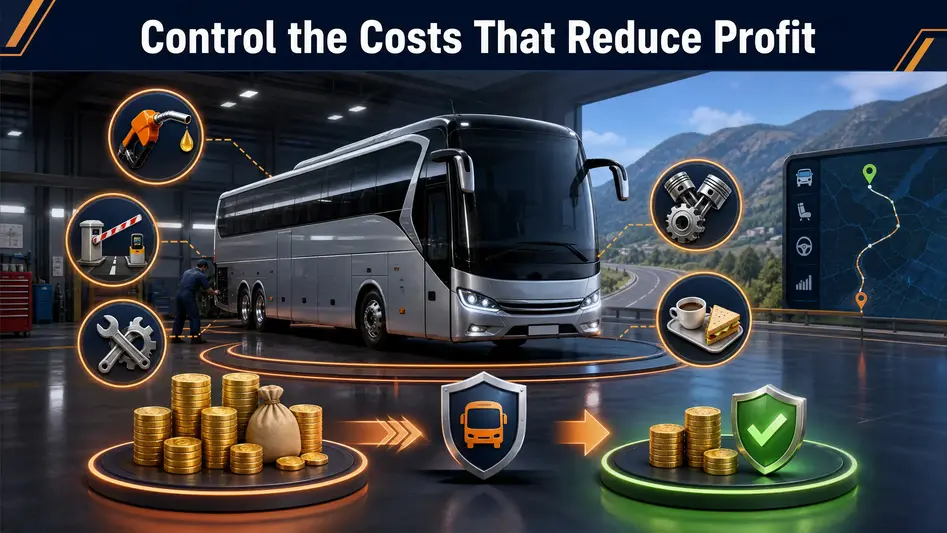
Fuel Costs
Fuel can take a noticeable share of your route earnings. Compare fuel costs before choosing between similar routes. Check Bus Simulator Ultimate fuel efficiency when comparing buses. Avoid wasting fuel through unnecessary detours or poor driving habits.
Toll Fees
Toll fees also reduce your final earnings. Add them to your route calculation before comparing trips. A route with higher ticket sales may leave less profit after tolls.
Maintenance and Repairs
Maintenance and repair costs can reduce the return from each trip. Keep your bus in good condition and include repair spending in your records. This gives you a more accurate view of your actual profit.
Catering
Catering can provide another revenue opportunity on suitable trips. Consider it alongside your route setup and passenger needs. Do not treat every extra feature as automatic profit. The key rule stays simple: gross earnings show what you make, while net profit shows what you keep.
Choose Buses Based on Return, Not Price
The cheapest bus is not always the best business choice. A more expensive bus can earn better returns when its features match your routes.
Before buying, compare:
- Purchase cost: Check how much capital the bus requires.
- Passenger capacity: More seats can increase revenue on busy routes.
- Comfort: Better comfort can support passenger satisfaction.
- Fuel efficiency: Lower fuel use can protect your net profit.
- Running costs: Include regular operating and repair expenses.
- Route suitability: Match the bus to the routes you run most.
- Expected revenue: Estimate whether the bus can recover its cost.
High-Capacity Buses
A high-capacity bus makes more sense when passenger demand stays strong. Extra seats can increase ticket revenue when you regularly fill them. Buying extra capacity for low-demand routes can waste your investment. Check your current routes before upgrading. A bus that fits your existing demand can produce better returns than a larger model you rarely fill.
Setra, Temsa, and Marcopolo
Players may compare brands such as Setra, Temsa, and Marcopolo when choosing their next bus. Do not judge them by brand name alone. Compare their capacity, comfort, fuel use, running costs, and route fit. Use bus upgrades when they support higher earnings or lower costs. The best buses for your company depend on how you actually use them. Focus on return rather than purchase price alone.
Reinvest Your Profit Into the Company
Your first profitable route should become the base for future growth. Do not spend every coin after a successful trip. Keep enough funds for fuel, repairs, tolls, and other operating expenses. Follow a simple reinvestment cycle:
First profitable route → Better bus → More passengers → Higher net profit → Fleet expansion
Start by improving the setup that already makes money. A useful upgrade should increase capacity, improve comfort, reduce costs, or support stronger route performance. Avoid buying another bus too early. Let your current setup produce consistent profit first. Then use the extra coins to expand your fleet. Good Bus Simulator Ultimate company management requires patience. Each purchase should support your next earning step. For Bus Simulator Ultimate fleet expansion tips, focus on steady returns instead of rapid spending. This approach supports long-term bus company growth and gives your company more room to handle higher operating costs. Bus Simulator Ultimate Passenger Reviews
Add Drivers for Passive Income
Drivers can help your company earn while you focus on your own routes. They turn an extra bus into another potential income source. Do not hire an employee simply because you can afford one. Compare the driver’s expected earnings with the employee costs first. Also make sure you have a suitable bus available for the driver. Start with your active bus and build a reliable income base. Once your route produces steady profit, consider adding another bus and assigning a driver. This creates a second revenue stream without requiring you to drive every trip yourself.
When Should You Hire a Driver?
Hire a driver when your available capital can cover the bus, employee costs, and normal operating expenses. Keep some coins available for your main routes and unexpected costs. A simple rule works well:
Expected Driver Income − Employee Costs = Additional Profit
If the result stays positive, the driver can support your company growth. Repeat this process as your fleet grows. This approach makes Bus Simulator Ultimate passive income a secondary revenue stream. Use your Bus Simulator Ultimate drivers to support expansion, not replace profitable active routes. A careful Bus Simulator Ultimate hire drivers guide should always focus on income versus cost.
Use Free Rewards to Increase Your Profit
Free rewards can add extra coins and gold without changing your main route strategy. Check the available rewards before starting your next trip.
Gifts and Daily Bonuses
Collect gifts and daily bonuses whenever they become available. These rewards can give your company extra resources with little effort.
Ads and Sponsors
Some reward systems let players watch ads for rewards. Use these options when the reward justifies the viewing time. Bus Simulator Ultimate ads sponsors money can supplement your regular route earnings.
Double Earnings Ads
A Bus Simulator Ultimate double earnings ads option can increase a qualifying reward when available. Check the reward details before watching. Treat these rewards as extra income rather than your main strategy. Your routes, cost control, and fleet should still drive company growth. This keeps your Bus Simulator Ultimate gold and money guide focused on steady, legitimate earnings.
Use the Used Bus Market Carefully
The Bus Simulator Ultimate used bus market can lower your upfront spending. However, a cheaper bus does not always mean a better deal. Check the bus condition before buying. Include any repair costs in your total investment. Then compare its passenger capacity and expected route revenue with your current bus. Use this simple rule:
Purchase Price + Repairs < Expected Additional Earnings
A used bus makes more sense when it can earn enough to cover its full cost. Check whether its capacity fits your passenger demand. Also consider the routes you plan to run. Do not buy a used bus only because its price looks low. Calculate the full investment first. If the bus needs expensive repairs, your savings may disappear quickly. The best purchase supports your next stage of company growth without putting pressure on your operating budget. Bus Simulator Ultimate Company Logo Ideas
Follow the Profit Growth Cycle
A profitable bus company grows through small, planned steps. Follow the same cycle after each successful stage.

Stage 1 — Build
Start with one reliable route. Focus on steady passenger demand and manageable running costs.
Stage 2 — Measure
Record route revenue, fuel costs, toll fees, repairs, and final profit. Track your coins per hour as well.
Stage 3 — Improve
Improve the bus or route setup when the change can raise earnings. Avoid upgrades that offer little financial value.
Stage 4 — Reinvest
Put part of your extra coins back into the company. Keep enough funds for regular operating expenses.
Stage 5 — Expand
Add another bus when your current setup produces consistent profit. Choose a bus that matches your passenger demand.
Stage 6 — Automate
Hire drivers and assign them suitable buses. Their earnings can create another income stream while you run your own routes.
Stage 7 — Scale
Keep expanding your fleet as your profits grow. Add buses, improve routes, and manage costs at every stage.
This cycle creates a simple Bus Simulator Ultimate company building strategy. You earn, measure, reinvest, and expand instead of spending coins without a plan.
Common Profit Mistakes to Avoid
Small money mistakes can slow your company growth. Avoid these common problems when building your income.
These Bus Simulator Ultimate money tips support better spending decisions. A strong Bus Simulator Ultimate money guide no mods should focus on steady earnings rather than shortcuts.
A Simple Daily Profit Routine
A repeatable routine makes Bus Simulator Ultimate money management easier. Use these steps before and after each profitable session.
Step 1: Check Available Coins
Review your current Bus Simulator Ultimate coins. Keep enough funds for fuel, repairs, and other costs.
Step 2: Choose the Strongest Route
Pick a route with good passenger demand and suitable travel time. Focus on expected net profit, not gross revenue.
Step 3: Check Operating Costs
Review fuel use, toll fees, and other expected expenses. Reject routes that leave weak returns after costs.
Step 4: Complete the Route Carefully
Drive smoothly and aim for an on-time arrival. Good service can support passenger satisfaction.
Step 5: Record Net Profit
Subtract your running costs from the route revenue. Track your coins per hour for better comparisons.
Step 6: Collect Available Rewards
Check gifts, daily bonuses, objectives, and available ad rewards. Treat these rewards as extra income.
Step 7: Reinvest Only the Surplus
Keep a reserve before buying upgrades or expanding your fleet. Spend extra coins only when the purchase supports growth.
Step 8: Add a Driver or Bus When Sensible
Expand after your current setup produces steady profit. Choose another bus or driver only when the expected income supports the cost.
Repeat this routine after each session. Over time, small profitable decisions can build a stronger and more profitable bus company.
Frequently Asked Questions
How do you make money fast in Bus Simulator Ultimate?
Choose routes with strong passenger demand and good net returns. Control fuel and toll costs, collect free rewards, and reinvest your surplus into profitable upgrades.
What is the most profitable route in Bus Simulator Ultimate?
No single route guarantees the highest profit for every player. Compare ticket revenue, fuel costs, toll fees, travel time, and your bus setup. Then calculate profit per hour.
How can I increase profit in Bus Simulator Ultimate?
Track route revenue and running costs after every trip. Choose suitable routes, improve your bus when needed, control expenses, and reinvest extra coins into fleet growth.
Can I make money in Bus Simulator Ultimate without mods?
Yes. Use legitimate methods such as routes, daily bonuses, gifts, objectives, and available ad rewards. Bus Simulator Ultimate money guide no mods strategies can support steady company growth.
How does passive income work in Bus Simulator Ultimate?
Drivers can generate additional company income when you assign them suitable buses. Compare their expected earnings with employee and operating costs before expanding.
What should I spend my Bus Simulator Ultimate coins on first?
Prioritize purchases that can improve future earnings. Consider a suitable bus, useful upgrades, or fleet expansion. Keep a coin reserve for fuel, repairs, and other costs.
Conclusion
Building steady profit in Bus Simulator Ultimate starts with smart money management. Focus on net profit instead of gross route earnings. Choose routes that offer good returns after fuel, tolls, and repair costs. Reinvest your extra coins into better buses, useful upgrades, and fleet expansion. Add drivers when your company can support their costs and use them to build passive income. Collect daily bonuses and legitimate ad rewards as extra earnings. Keep your strategy simple: earn → control costs → reinvest → expand. Repeat this cycle with each profitable decision, and your bus company can grow without relying on shortcuts.