
Bus Simulator Ultimate Toll Roads: Toll Cost, Route Value & Timing Comparison

Choosing between toll and non-toll routes can change the value of your trip. A toll road adds another expense to your route. A longer free route may save money but take more time. Three factors matter most: toll cost, route value, and travel time. Bus Simulator: Ultimate calculates route distance, travel time, and fuel expense when you create a route. Toll fees also count as an in-game expense.
Fuel costs add another cost during long-distance routes. A faster route can save time without giving you the best financial result. A cheaper route can also lose value if it takes much longer. This guide compares these factors together. You can use the comparison to choose routes that fit your money and time goals.
How Toll Roads Affect Route Value
What You Pay at a Toll Road
A toll road adds a direct expense to your Bus Simulator Ultimate route. The game lists toll fees among the costs that reduce your company money. Your route also has other expenses, including fuel and bus services. The game calculates fuel expense when you create a route. This creates a simple difference between route revenue and route value. Revenue shows what the trip earns. Route value considers what you spend during that trip. For example, imagine two routes earn similar ticket revenue. One route uses a toll road. The other avoids the toll but takes longer. The toll route may leave less money after expenses.
Why Route Price Alone Is Not Enough
A higher ticket price does not always mean a better route. You should compare the route’s earnings with its total costs. Fuel consumption can change the result, especially on long-distance routes. Different buses also have different fuel consumption rates. Travel time also matters. A route with higher earnings may take much longer to complete. Another route may finish sooner while giving you a lower payout. Think about the complete trip:
Route value = Earnings − Toll Cost − Fuel Cost
Then compare the result with the time required. This gives you a clearer picture of the route’s actual value.
Toll Road vs Non-Toll Road
A toll route usually gives you another cost to consider. A non-toll route can avoid that expense, but it may take longer. The official game listing confirms that Highway Toll Roads form part of Bus Simulator Ultimate’s gameplay. A toll route can make sense when it saves significant time. A non-toll route can make more sense when the toll offers little time savings. For example, suppose Route A costs less but takes 30 minutes. Route B costs more but takes 20 minutes. The extra toll buys 10 minutes of saved travel time.
Now compare that time saving with the extra cost. If the difference is small, the cheaper route may offer better value. If the faster route also produces stronger earnings, the toll may become easier to justify. This is why toll cost, route value, and travel time should work together in your comparison.
Comparing Toll Cost With Route Value
Calculate the Cost of a Route
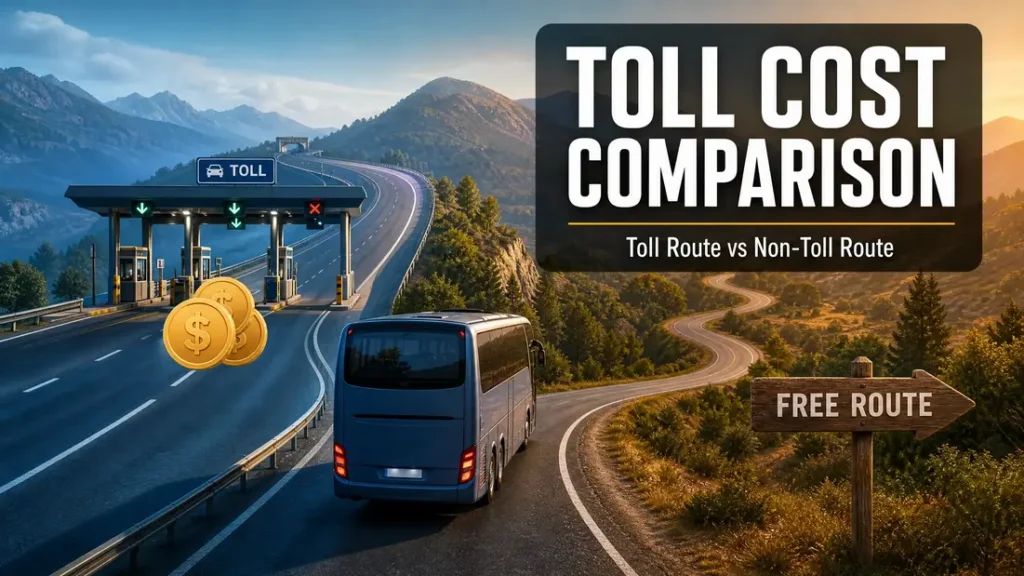
Start with the money your route can generate. Bus Simulator Ultimate earns money from completed passenger routes. Next, check the main expenses linked to that trip. Toll fees and fuel costs both reduce your available money. Fuel expense depends on the route and the bus you choose. Different buses also have different fuel consumption rates. Your basic calculation can look like this:
Total Route Cost = Toll Cost + Fuel Cost + Other Trip Expenses
Then compare that cost with your expected route revenue. A long-distance route can generate more money but may require more fuel. A toll road adds another expense to the same trip.
Find the Remaining Route Value
After finding the total cost, subtract it from the expected earnings.
Remaining Route Value = Route Revenue − Total Route Cost
For example, imagine two routes both generate €10,000. Route A costs €2,000 in tolls and fuel. You keep €8,000 after those costs. Route B costs only €1,200. You keep €8,800 from the same revenue. Route B gives you €800 more despite having the same ticket revenue. This shows why you should not judge a route by ticket price alone. The cheaper route can leave more money after expenses. The game also lets players manage their bus company and aim for maximum profit.
High-Toll Routes With Better Earnings
A higher toll does not always make a route a poor choice. A high-value long-distance route may produce enough revenue to cover its extra toll cost. Passenger demand can also affect the money earned from a route. Your bus choice matters too. Different buses have different passenger capacities and fuel consumption rates. For example, a larger coach may carry more passengers but use more fuel. A smaller bus may cost less to operate but earn less from a full trip. The best choice depends on the complete route calculation. Compare these three numbers before choosing:
Expected Earnings → Total Costs → Remaining Value
Then add travel time to the comparison. A route with higher remaining value may still take much longer. This approach helps you judge whether the extra toll gives your trip enough financial value.
Does a Faster Toll Route Save Enough Time?
Compare Travel Time

Travel time gives another way to judge a toll road. A cheaper route can take much longer than a highway toll route. First, compare the estimated time for both routes. Then calculate the difference in minutes. For example:
The toll route costs more, but it saves 15 minutes. This difference matters more on long-distance routes. A small time saving may not justify a high toll. A larger saving can make the extra cost easier to accept.
Put a Value on Time Saved
Compare the extra toll with the time you save. This gives you a practical way to judge the route. Suppose Route A costs less but takes 40 minutes. Route B costs €500 more but takes only 25 minutes. Route B saves 15 minutes for an extra €500. Now ask whether those 15 minutes provide enough value. You may prefer Route A if saving money matters more. You may choose Route B if completing the trip sooner has greater value. This comparison works better than looking at the toll fee alone. You need to see what the extra payment gives you.
Extra Toll Cost ÷ Time Saved = Cost of Each Minute Saved
In this example, €500 ÷ 15 minutes equals about €33.33 per saved minute. This does not mean the game assigns a fixed value to each minute. It gives you a simple comparison tool for your own route decisions.
When Saving Time Is Worth the Toll
A toll road can make sense when it saves a large amount of travel time. This becomes more useful when the route also offers strong earnings. Short trips need closer comparison. A small time saving may not justify an expensive toll. High-value routes can make the extra toll easier to accept. Strong passenger demand can increase the route’s potential revenue. Fast completion can also help you start another trip sooner. That matters if you actively manage several long-distance routes. For example, saving 20 minutes may matter more than saving €200 on a busy route. You could use that saved time for another profitable trip. The best choice depends on the complete result:
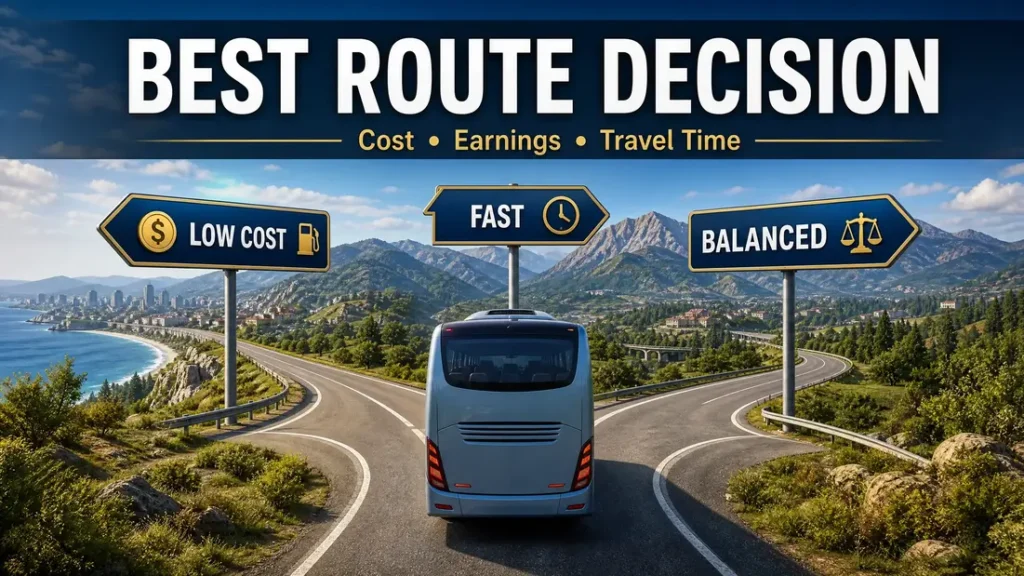
Toll Cost + Time Saved + Route Value = Better Route Decision
Do not choose a toll road simply because it looks faster. Compare the extra cost with the actual time you save.
Toll Cost vs Route Value vs Timing
Low-Cost, Slow Route
A low-cost route keeps your trip expenses under control. It may avoid highway toll roads and reduce direct route costs. The trade-off comes through travel time. A longer route can keep your bus on the road for more time. This option works well when:
A cheaper route can offer better value when the toll saves only a few minutes.
High-Cost, Fast Route
A fast toll route can reduce travel time. However, you pay more for that shorter journey. The extra toll should have a clear benefit. A small time saving may not justify a large route expense. This option can work well when:
For example, paying more can make sense if a toll route saves 20 minutes. The decision changes if it saves only three minutes. Bus Simulator Ultimate Rain Driving Tips
Balanced Route
A balanced route sits between the cheapest and fastest options. It may include a moderate toll and reasonable travel time. This route can provide good value for regular trips. You avoid the highest toll costs without accepting the longest journey. Compare these three points before choosing:
Toll Cost → Remaining Route Value → Travel Time
A balanced route can work especially well for repeated long-distance routes. Small savings can add up across many trips. The goal is not always the lowest toll or shortest journey. The better choice gives you a useful balance between cost, earnings, and time.
Practical Route Comparison Example
A simple comparison can help you judge a toll route before starting a trip. The table below uses an illustrative example.
| Factor | Route A | Route B | Route C |
| Toll Cost | Low | High | None |
| Travel Time | Medium | Short | Long |
| Fuel Cost | Medium | Medium | High |
| Route Value | Medium | High | Low |
| Time Saved | — | High | Low |
| Overall Value | Good | Good | Average |
Which Route Has the Lowest Cost?
Route C has no toll fee, but that does not make it the cheapest overall. Its longer distance can increase fuel consumption. Fuel costs can reduce the money you keep from the trip.
Route A may provide the best low-cost option because it combines a low toll with medium travel time.
Which Route Saves the Most Time?
Route B wins on travel time. Its shorter journey can help you complete the trip faster. The higher toll becomes its main disadvantage. You should check whether the saved time justifies that extra expense.
Which Route Gives the Best Balance?
Route A provides the most balanced choice in this example. It has a low toll, medium travel time, and medium fuel cost. It does not offer the fastest trip, but it avoids the highest expenses.
Route B can still provide strong overall value. Its high route value can offset part of its higher toll.
Why the Cheapest Route Isn’t Always the Best
A route without tolls can look attractive at first. However, a longer route can consume more fuel and time. Imagine Route C saves €500 in tolls but takes 20 minutes longer. You also spend more on fuel during the longer journey. Route B may cost more but finish much sooner. That time could matter if you plan another long-distance route afterward. Compare toll cost, fuel expense, route earnings, and travel time together. The best route depends on the final value after expenses, not the toll fee alone.
How to Choose the Best Toll Route
Choosing a toll route needs more than checking the fastest option. Compare its cost, distance, time, and final value.
Check the Toll Cost First
Start by checking the toll expense for the route. A toll adds another cost to your trip. Compare that fee with the expected route earnings. A high toll can reduce your remaining money. A small toll may have little effect on a high-value route. A large toll needs closer attention.
Check the Route Distance
Distance can change the total cost of your trip. A longer route usually keeps your bus driving for more time. Longer routes can also increase fuel consumption. This can reduce the money left after the trip. Compare the toll road with nearby alternatives. A non-toll route may cost less but cover more distance.
Compare Estimated Travel Time
Check the estimated travel time for each available route. Then calculate the difference between them. A toll road may save several minutes compared with a longer alternative. For example, one route may take 30 minutes while another takes 45 minutes. The toll route saves 15 minutes. Compare those 15 minutes with the extra toll. A small saving may not justify a large expense.
Consider Fuel Consumption
Fuel adds another expense to long-distance bus routes. A longer non-toll route can increase fuel use. Your bus choice can also affect fuel consumption. Bus Simulator Ultimate includes different coaches with different specifications. Compare the expected fuel cost for both routes. A toll road may sometimes cost more in tolls but less in fuel. This makes the total cost more useful than looking at the toll alone.
Compare Final Route Value
After checking every expense, compare the remaining route value.
Final Route Value = Expected Earnings − Total Route Expenses
Include tolls and fuel costs in your calculation. Then compare the result with the travel time. A route with a higher toll can still provide better value. A toll-free route can also perform better when it offers similar earnings and shorter costs. Choose the route that gives you the best balance between earnings, expenses, and travel time.
When Should You Choose a Toll Road?
A toll road makes sense when its extra cost gives your trip a useful advantage. Compare the saved time with the added expense before choosing it.
Choose a Toll Road When It Saves Significant Time
A toll road can reduce travel time on a long route. The time saved becomes more useful when the difference is large. For example, a toll route may take 25 minutes. A non-toll route may take 45 minutes. The toll saves 20 minutes in this case. That saving can justify the extra expense.
Choose It When the Route Has Better Overall Value
Look beyond the toll fee. Compare expected earnings with all major route expenses. A toll route may cost more but still leave better returns. Lower fuel costs or higher route earnings can offset the toll. Use this simple comparison:
Route Value = Expected Earnings − Toll Cost − Fuel Cost
Then compare the result with the travel time.
Consider Longer, Higher-Value Journeys
Long-distance routes can make toll roads more useful. These routes often involve higher passenger revenue and longer travel times. A faster toll route can help you complete a valuable journey sooner. You can then use the saved time for another route. The extra toll should still fit the route’s expected value.
Avoid Extra Costs for Small Time Savings
Do not pay a high toll for a tiny time saving. Suppose a toll road saves only five minutes. The extra cost may not provide enough benefit. A cheaper route may give you better returns if both routes have similar earnings. Bus Simulator Ultimate Highway Guide
Compare the Complete Trip
The best decision comes from comparing the whole trip. Check these factors together:
Toll Cost → Fuel Cost → Route Earnings → Travel Time → Final Value
A toll road should offer a clear benefit before you choose it. The cheapest route is not always best, and the fastest route is not always most profitable.
When Is a Non-Toll Route Better?
A non-toll route can offer better value when the toll does not provide enough time savings. Compare both routes before making your choice.
The Toll Is High Compared With the Time Saved
A high toll needs a clear benefit. If it saves only a few minutes, the extra expense may not make sense. For example, a toll route may cost €700 more but save only five minutes. The cheaper route could provide better returns.
The Alternative Route Has Similar Travel Time
Sometimes the non-toll route takes almost the same time. In that case, paying extra for the toll offers little benefit. Compare the estimated travel times before starting the trip. A small difference can make the cheaper route more attractive.
The Non-Toll Route Has Better Overall Value
Look at the money left after route expenses. A non-toll route can produce better returns when its fuel cost stays reasonable. Use this simple calculation:
Route Value = Expected Earnings − Fuel Cost − Toll Cost
A non-toll route has no toll expense. This can give it an advantage when both routes produce similar earnings.
You Want to Reduce Trip Expenses
Non-toll routes can help reduce direct trip costs. This option can suit players who want to keep more money from each journey. Lower expenses become more useful across repeated long-distance routes. Small savings can add up over many trips.
The Longer Route Has No Major Disadvantage
A longer route does not always create a serious problem. If it adds only a little travel time, avoiding the toll may be the better choice. For example, saving €500 may be more useful than saving five minutes. The choice depends on your current route goals. Compare cost, earnings, fuel, and time before deciding. Choose the non-toll route when its lower cost gives you better overall value.
Simple Toll Road Decision Formula
You can use a simple formula to compare toll and non-toll routes. It helps beginners focus on the money left after trip expenses.
Route Value = Expected Earnings − Toll Cost − Fuel Cost
Start with the expected earnings from the route. Then subtract the toll and fuel expenses. For example, a route earns €8,000. The toll costs €600, while fuel costs €900. €8,000 − €600 − €900 = €6,500 Your remaining route value becomes €6,500. Now add travel time to your comparison.
Best Route = Good Remaining Value + Reasonable Travel Time
A route with slightly lower earnings may still save significant time. Another route may earn more but take much longer. For example, Route A leaves €6,500 and takes 30 minutes. Route B leaves €6,800 but takes 50 minutes. Route B gives more money, but Route A saves 20 minutes. Your choice depends on how much you value that saved time. Do not judge a route by toll fees alone. Compare earnings, tolls, fuel, and travel time together. This simple method gives you a clearer way to compare highway toll roads before starting a trip.
Common Mistakes When Comparing Routes
Route comparison becomes easier when you avoid a few common mistakes. Many players focus on one number instead of the complete trip.
Choosing the Cheapest Route Automatically
A toll-free route may look like the obvious choice. However, it can take longer and use more fuel. Check the complete route cost before choosing the cheapest option. A slightly higher toll may provide better overall value.
Ignoring Travel Time
Money is not the only factor in a route decision. Travel time also affects how quickly you can finish a journey. A cheaper route may take much longer than a toll road. Compare the time difference before rejecting the faster route.
Looking Only at Ticket Revenue
High ticket revenue does not always mean high profit. Your trip still has expenses after you collect passenger payments. Subtract toll and fuel costs from the expected earnings. Then compare the remaining value between routes.
Forgetting Fuel Consumption
A longer route can increase fuel consumption. This extra cost can reduce the advantage of avoiding a toll. Always consider fuel when comparing a toll road with a longer alternative.
Paying a High Toll for Very Little Time Saved
A high toll should provide a useful benefit. Paying extra for a tiny time saving may reduce your route value. Always consider fuel when comparing a toll road with a longer alternative.
Ignoring the Overall Route Value
The biggest mistake is judging a route by one factor. Do not focus only on toll cost, travel time, or ticket revenue. Compare them together. Use this simple approach:
Expected Earnings − Toll Cost − Fuel Cost = Remaining Route Value
Then compare the remaining value with the travel time. This gives you a clearer picture of which route fits your current goal.
Quick Toll Route Comparison Checklist
Use this quick check before choosing between toll and non-toll routes.
A quick comparison can prevent unnecessary toll expenses. It also helps you choose routes based on the complete trip rather than one factor. Bus Simulator
Frequently Ask Questions
Is a toll road worth using in Bus Simulator Ultimate?
A toll road can be worth using when it saves significant time. Compare the extra toll with the route’s earnings and fuel cost. A faster route is more useful when it gives you better overall value.
How should I compare toll cost with route value?
Start with the expected route earnings. Subtract the toll and fuel costs from that amount.
Route Value = Expected Earnings − Toll Cost − Fuel Cost
Then compare the remaining value with the travel time.
Is the fastest route always the best route?
No. The fastest route can have a high toll or fuel cost. A slower route may leave more money after expenses. Compare both routes before choosing.
Should I choose a non-toll route to save money?
Not always. A non-toll route can cost less but take much longer. Choose it when the saved toll gives better value than the time saved by the toll route.
How does travel time affect route value?
Travel time shows how quickly you can complete a trip. A shorter route can help you finish sooner and start another journey earlier. You should still compare its extra costs.
What is more important, toll cost or travel time?
Neither factor always wins. Compare the toll with the time saved and the route earnings. The better choice depends on the complete trip value.
How can I find the most profitable route?
Compare expected earnings, toll costs, fuel costs, and travel time. Then calculate the money remaining after expenses. Choose the route with the best balance for your current goal.
Can a longer route be more valuable than a toll road?
Yes. A longer route can provide better value when it avoids a high toll. It may also work well when the time difference remains small. Check fuel use and travel time before deciding.
Conclusion
Choosing between toll and non-toll routes comes down to three factors: toll cost, route value, and timing. A low toll does not always mean better value. A fast route does not always give the highest return. Compare the complete trip before making your choice. Check the expected earnings, toll expense, fuel cost, and travel time together. This gives you a clearer view of the money left after expenses. A toll road can be a good choice when its time advantage justifies the extra cost. A non-toll route can work better when it offers similar timing with lower expenses. Use one simple rule: choose the route that gives you the best balance between earnings, expenses, and travel time.